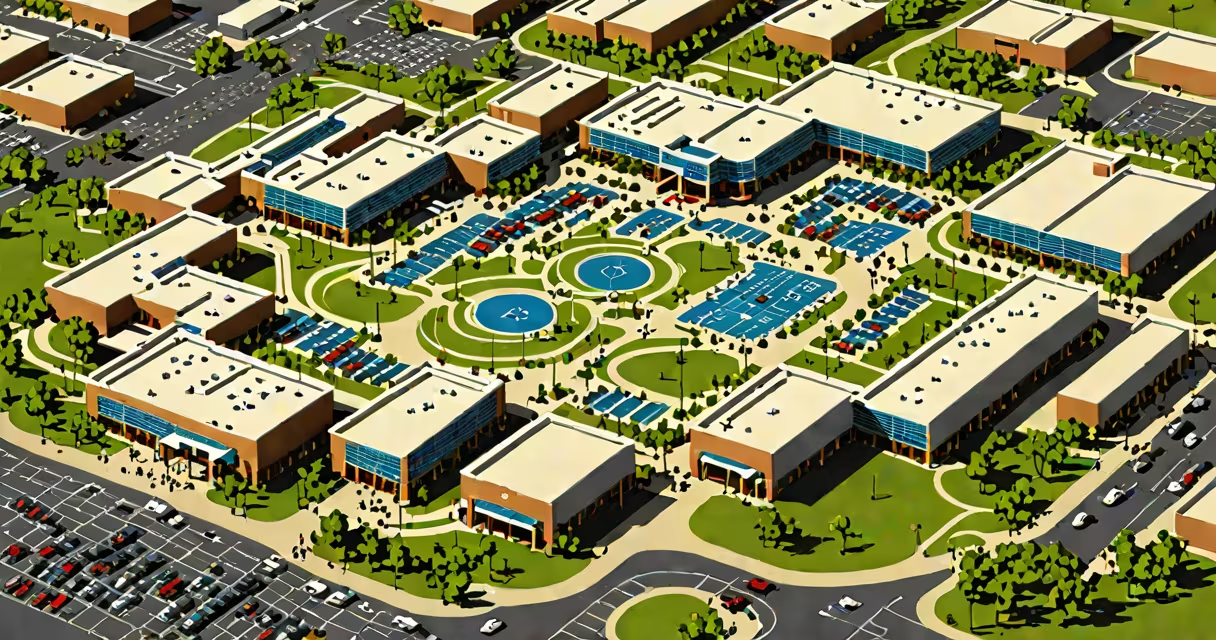
The Mall of GA is a shopping center located in Emanuel County, Georgia, originally opened in 1968 as part of a wave of regional mall development across the United States. The mall was designed to serve the growing suburban population in the area, providing a centralized location for retail, dining, and entertainment.
At its peak, the mall featured over 100 stores, including major department stores like Sears and Belk. The complex included a food court, a movie theater, and various specialty shops. The mall's design reflected the architectural trends of the time, with a two-story layout, skylights, and an open atrium.
Over the years, the Mall of GA has undergone several renovations and changes in ownership. In the late 1990s, the mall faced competition from larger shopping centers, leading to a decline in foot traffic. Despite efforts to revitalize the mall, several anchor stores closed, and the number of tenants decreased.
Today, the Mall of GA stands as a historical landmark, reflecting the evolution of retail in the region. While it no longer serves as a primary shopping destination, it remains a point of interest for those studying the history of retail architecture and the impact of suburban development.
For more information on the history and current status of the Mall of GA, visit the Emanuel County, GA website or local historical archives.
The Mall of GA was notable for several key features that set it apart from other shopping centers of its time:
The Mall of GA is significant for its role in the development of suburban retail centers. During the mid-20th century, regional malls became a symbol of economic growth and modernization. The Mall of GA was one of the first such malls in the region, setting a precedent for future developments.
According to the Georgia Encyclopedia, the construction of regional malls like the Mall of GA was driven by the increase in car ownership and the growth of suburban populations. These malls provided a centralized location for shopping, reducing the need for trips to downtown areas.
The mall's decline in the late 1990s reflects broader trends in retail, including the rise of online shopping and the opening of larger, more modern shopping centers. Despite these changes, the Mall of GA remains an important historical site, offering insights into the retail practices and architectural styles of the mid-20th century.
As of recent years, the Mall of GA has seen a reduction in the number of operating stores. Several anchor stores have closed, and the foot traffic has decreased. Efforts to revitalize the mall have included attracting new tenants and hosting community events, but these initiatives have had limited success.
Local historians and urban planners continue to study the Mall of GA as a case study in the evolution of retail architecture. The mall's design and historical significance make it a valuable resource for understanding the impact of suburban development on local economies and communities.
For those interested in visiting the Mall of GA, it is advisable to check current operating hours and tenant information. The site remains a point of interest for history enthusiasts and architects alike.
If you plan to visit the Mall of GA, here are some tips to improve your experience:
The Mall of GA offers a unique glimpse into the retail history of the region, making it a worthwhile destination for history buffs and architecture enthusiasts.