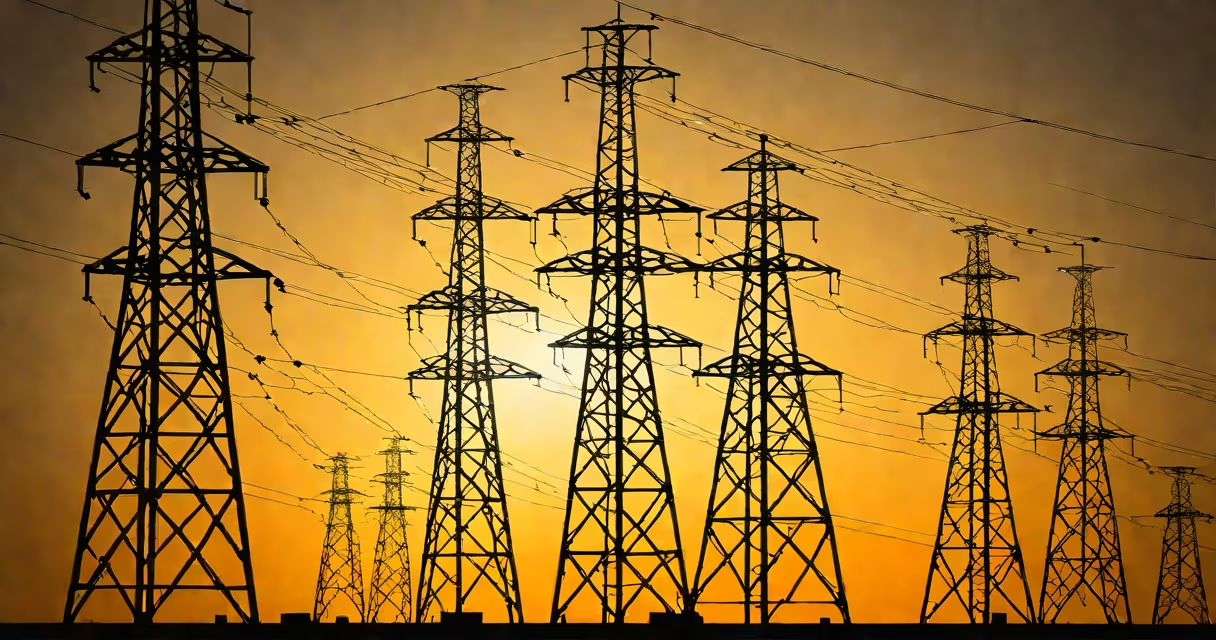
A power grid is an interconnected network that generates, transmits, and distributes electricity from power plants to homes and businesses. It consists of power stations, transmission lines, substations, and distribution lines working together to deliver electricity reliably.
Electricity flows through the power grid in three stages:
For example, a coal plant in Ohio might generate electricity, transmit it hundreds of miles via high-voltage lines, then distribute it to neighborhoods through lower-voltage wires.
The power grid comprises several key components:
| Type | Description | Example |
|---|---|---|
| AC Grid | Uses alternating current for efficient long-distance transmission | Most modern grids worldwide |
| DC Grid | Uses direct current for renewable energy integration and long-distance transmission | HVDC lines like the Cross-Channel link between UK and France |
| Microgrid | Localized grid serving a small area, often with its own power generation | University campuses or military bases |
Many people confuse the power grid with the electrical grid, but they're not the same. The power grid specifically refers to the infrastructure that delivers electricity, while the electrical grid encompasses both the physical infrastructure and the systems that control and manage electricity flow.
I once visited a substation where technicians monitored real-time data to balance electricity supply and demand. They adjusted voltage levels and rerouted power flows to prevent blackouts, showcasing the complex coordination behind keeping the power grid stable.
Power grids are critical for modern civilization, enabling reliable electricity access for homes, businesses, hospitals, schools, and industries. They support economic growth, improve quality of life, and improve national security. According to the U.S. Energy Information Administration, the average American uses about 11,700 kilowatt-hours of electricity per year, all delivered through the power grid.
As renewable energy sources like wind and solar become more prevalent, power grids must evolve to integrate these variable resources. Smart grid technologies, which use digital communication and advanced metering, are being deployed to improve efficiency, reliability, and sustainability.
Understanding the meaning of power grid reveals how essential this infrastructure is for daily life. From keeping lights on to powering medical equipment, the power grid's role in modern society cannot be overstated.