Rings worn by men on specific fingers carry distinct meanings tied to tradition, culture, and personal expression. These placements can signal marital status, affiliations, or fashion choices.
Each finger offers different symbolic or practical advantages. Placement on the left vs. right hand matters in Western cultures due to historical associations with marriage and other commitments. Some rings prioritize comfort or visibility based on daily activities.
Traditional meanings dominate in professional or formal settings, while personal style takes priority in casual contexts. Many men choose placements based on comfort during work or hobbies. For example, musicians often wear rings on less-used fingers to avoid interference.
A common misconception is that all ring fingers signify marriage. In reality, many cultures use the right hand for wedding bands, and some men wear rings solely for aesthetic reasons. The pinky finger, in particular, has evolved from signaling wealth to expressing individuality.
People often assume rings on non-traditional fingers lack meaning. However, the pinky ring has historical ties to European aristocracy and American counterculture. Similarly, thumb rings were once markers of status in ancient civilizations.
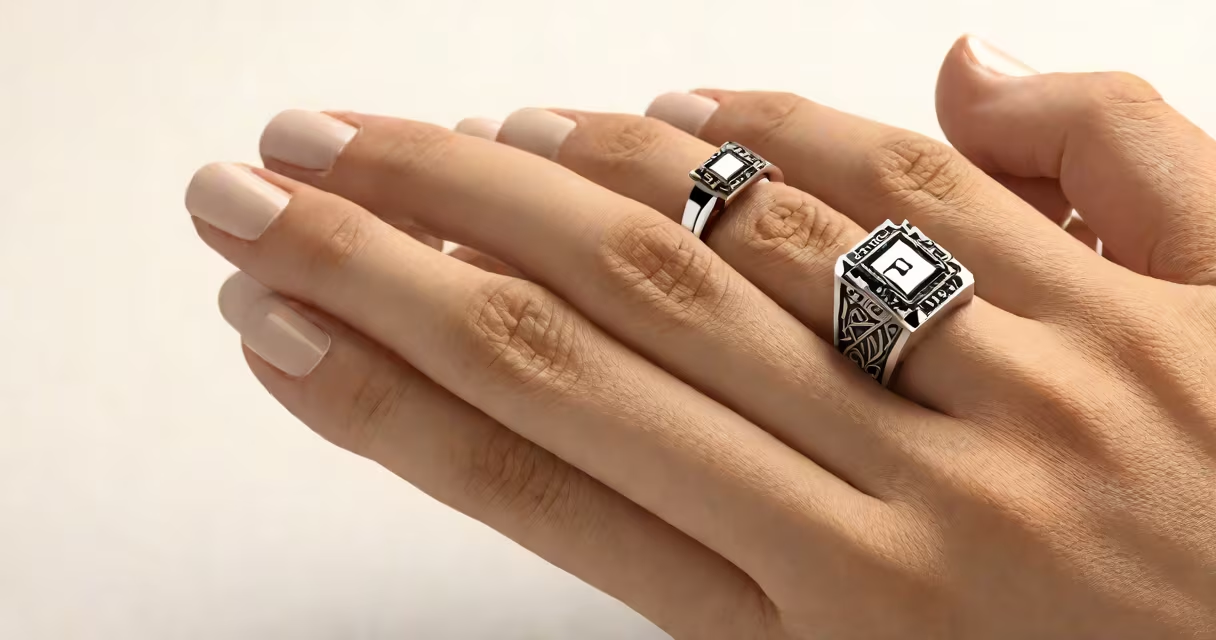
Consider a man wearing a signet ring on his right index finger. This placement combines visibility for sealing documents with a nod to family heritage, as signet rings traditionally bear family crests. The right hand choice might indicate cultural background or simply personal preference.
I once helped a client select rings for different occasions. He wore a wedding band on his left ring finger daily but chose a bold statement ring for his index finger during social events. This approach allowed him to honor traditions while expressing his personality.