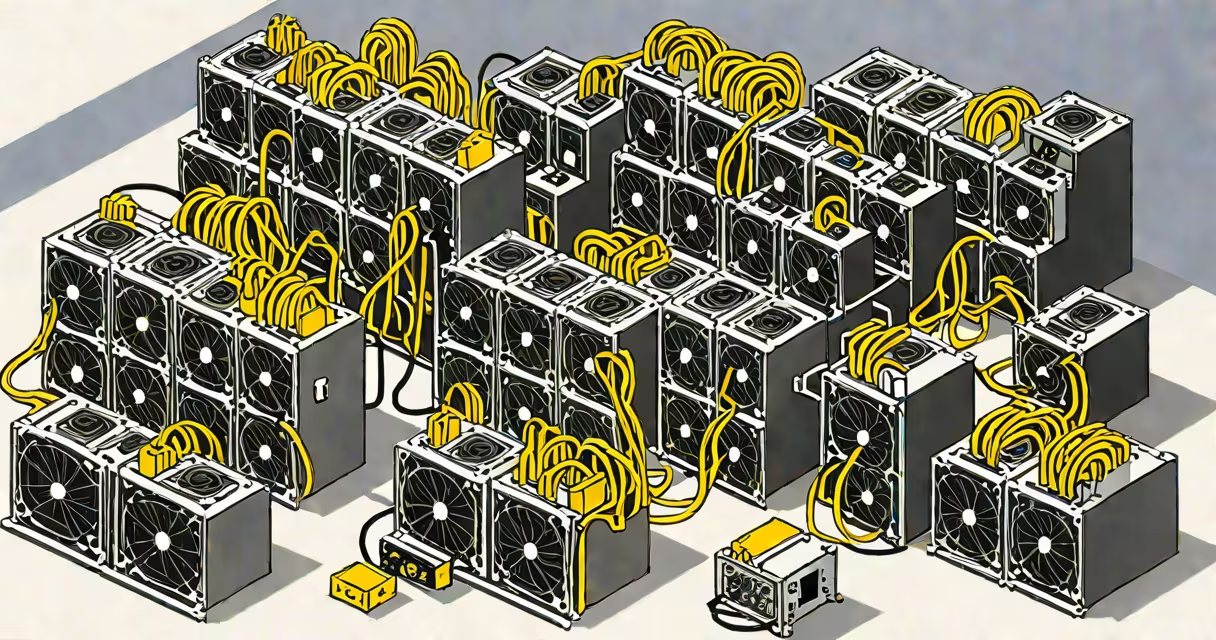
Most profitable crypto mining identifies which cryptocurrencies offer the highest returns based on hardware costs, electricity rates, and current market prices. Miners compare these factors to determine the best opportunities.
Cryptocurrency mining involves using computational power to validate transactions on a blockchain network. In return, miners receive newly minted coins as a reward. The profitability of mining depends on several factors, including the cost of electricity, the efficiency of mining hardware, and the current price of the cryptocurrency being mined.
Profitability in crypto mining is calculated by comparing the revenue generated costs incurred. Revenue is determined by the block reward and the current price of the cryptocurrency. Costs include electricity, hardware, and maintenance. The most common formula for calculating profitability is:
Profitability = (Block Reward × Current Price) - (Electricity Cost + Hardware Cost)
For example, if a miner receives 6.25 BTC as a block reward and the current price of BTC is $50,000, the revenue would be $312,500. If the electricity cost is $10,000 and the hardware cost is $5,000, the profitability would be $297,500.
The type of mining hardware used impacts profitability. The main types of mining hardware include:
| Type | Description | Examples |
|---|---|---|
| CPU Mining | Uses the central processing unit of a computer to mine cryptocurrencies. This method is outdated and not profitable for most cryptocurrencies. | Intel Core i9, AMD Ryzen 9 |
| GPU Mining | Uses graphics processing units to mine cryptocurrencies. More efficient than CPU mining but still less profitable than ASIC mining. | NVIDIA GeForce RTX 3080, AMD Radeon RX 6800 |
| ASIC Mining | Uses application-specific integrated circuits designed specifically for mining cryptocurrencies. The most efficient and profitable method for mining Bitcoin and other major cryptocurrencies. | Bitmain Antminer S19, Canaan AvalonMiner 1246 |
Crypto mining is used primarily to secure blockchain networks and validate transactions. Miners are rewarded with newly minted coins, which incentivizes them to participate in the network. The most common use cases for crypto mining include:
One common misconception is that crypto mining is always profitable. In reality, profitability depends on various factors, including the cost of electricity, the efficiency of mining hardware, and the current price of the cryptocurrency. Another misconception is that anyone can start mining with a regular computer. While it is possible to mine with a CPU or GPU, it is often not profitable compared to using specialized mining hardware like ASICs.
Some people believe that mining is harmful to the environment due to its high energy consumption. While it is true that mining requires a significant amount of electricity, many mining operations are now using renewable energy sources to reduce their carbon footprint. According to the Cambridge Bitcoin Electricity Consumption Index, approximately 58% of Bitcoin mining is powered by renewable energy.
To find the most profitable cryptocurrencies to mine, miners use specialized tools and websites that provide real-time data on mining profitability. These tools take into account factors such as the current price of the cryptocurrency, the block reward, the difficulty of mining, and the cost of electricity. Some popular tools for finding the most profitable cryptocurrencies to mine include CryptoCompare and WhatToMine.
For example, using WhatToMine, a miner can input their mining hardware specifications and electricity cost to see a list of the most profitable cryptocurrencies to mine. The tool provides real-time data on mining profitability, allowing miners to make informed decisions about which cryptocurrencies to mine.
I have personally used these tools to compare the profitability of different cryptocurrencies. By inputting my mining rig specifications and electricity cost, I was able to identify the most profitable cryptocurrencies to mine and adjust my mining strategy accordingly.