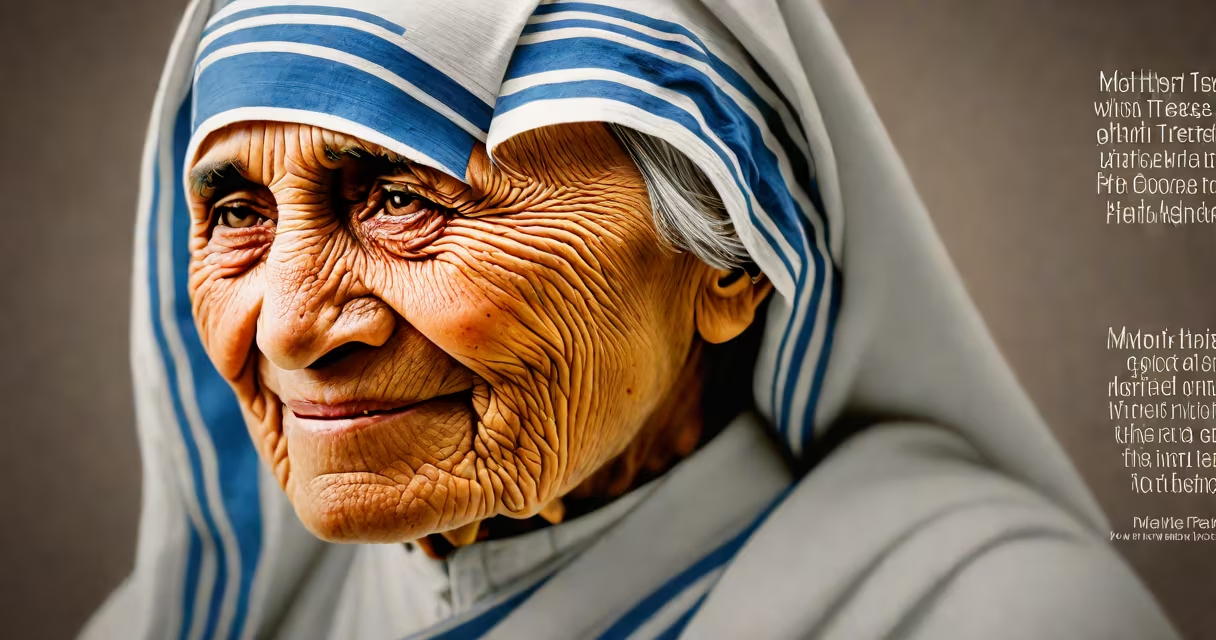
Mother Teresa's famous quote about ripples states, "I alone cannot change the world, but I can cast a stone across the waters to create many ripples." This metaphor illustrates how small actions can inspire widespread change.
The quote uses the image of throwing a stone into water to show that even minor actions can have far-reaching effects. Mother Teresa emphasized that while one person cannot single-handedly change the world, their efforts can motivate others to act, creating a chain reaction of goodwill.
Ripple effects can be categorized based on their scope and impact:
| Type | Description | Example |
|---|---|---|
| Immediate Ripples | Direct results of an action | A single act of kindness, like buying a meal for someone in need |
| Extended Ripples | Indirect effects that spread over time | Starting a community garden that inspires others to grow their own food |
| Cultural Ripples | Long-term societal changes | Advocating for education reform that improves access for generations |
This concept is important because it shifts the focus from overwhelming global problems to manageable personal actions. According to research by the University of Oxford, small acts of kindness can improve mental health and community cohesion. Mother Teresa's teachings remind us that everyone has the power to make a difference, no matter how small.
Many people misunderstand this idea as trivial, thinking that only grand gestures matter. However, studies show that consistent small actions often have a more profound impact than occasional large ones. For instance, regularly volunteering at a local shelter can build trust and relationships within the community, whereas a one-time large donation might not have the same lasting effect.
In 2010, a teacher in India named Sunita began teaching underprivileged children in her village. Her small classroom inspired other teachers to join, and within a year, the initiative grew into a school educating over 200 children. Sunita's actions created ripples that transformed her community's educational field. This aligns with Mother Teresa's quote, demonstrating how one person's dedication can inspire widespread change.
Some believe that only significant efforts count, but Mother Teresa's quote emphasizes the power of small, consistent actions. Another misconception is that ripples are immediate, but often, the effects take time to manifest. For example, planting trees to combat deforestation may not show results for years, but the long-term benefits are substantial.
People often confuse ripple effects with viral trends. While both spread widely, ripples focus on positive, lasting change, whereas viral trends can be fleeting and superficial. Understanding this distinction helps clarify the true meaning behind Mother Teresa's quote.
Mother Teresa's quote about ripples highlights the importance of small actions in creating lasting change. By understanding how ripple effects work and recognizing their significance, anyone can make a meaningful difference in the world. As Mother Teresa showed, even the smallest acts of kindness can inspire widespread transformation.