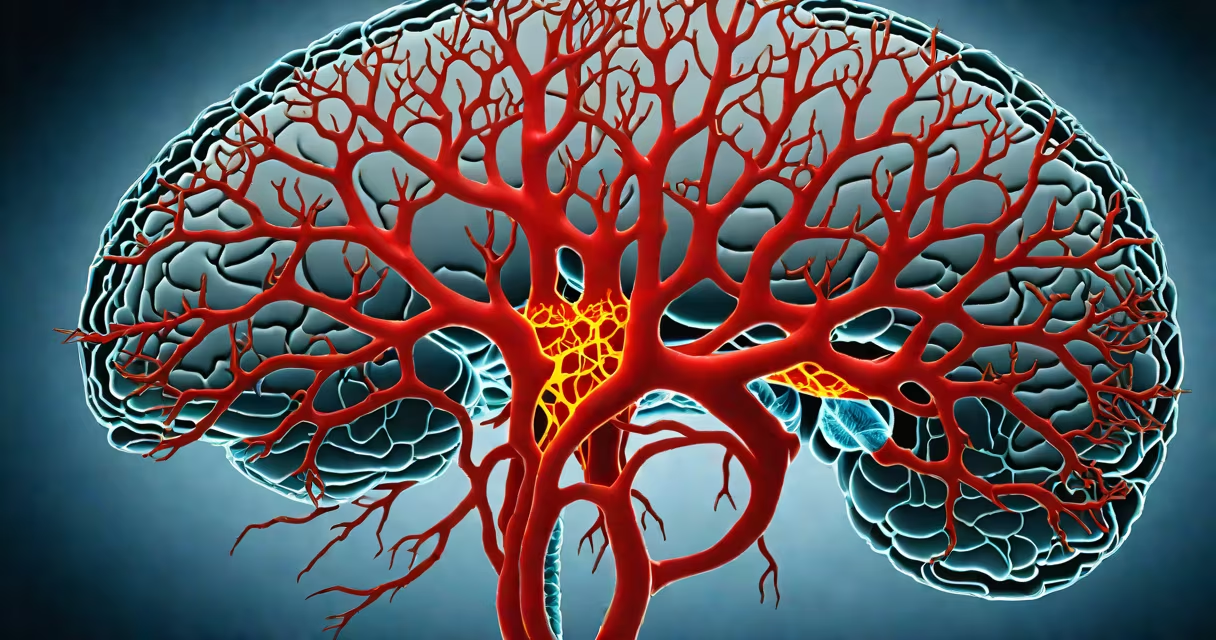
Moya moya syndrome is a rare, progressive cerebrovascular disorder where the brain's major arteries narrow, forcing smaller vessels to compensate, resembling a "puff of smoke" on imaging.
The condition develops when primary arteries at the base of the brain gradually constrict due to unknown causes. The brain responds by developing a network of tiny, fragile collateral vessels to maintain blood flow. These vessels resemble a "puff of smoke" (moya moya in Japanese) on angiograms.
| Type | Description | Typical Age of Onset |
|---|---|---|
| Primary | Unknown cause, often genetic | Children (5-10 years) |
| Secondary | Develops after another condition (e.g., atherosclerosis, radiation therapy) | Adults (30-50 years) |
Moya moya syndrome occurs globally but is most common in East Asia. The exact cause remains unknown, though genetic factors play a role in primary cases. Secondary cases develop due to other conditions damaging major arteries.
Many confuse moya moya syndrome with moya moya disease, which specifically refers to the idiopathic (primary) form., while both conditions involve narrowed arteries, moya moya syndrome includes secondary cases with known causes.
A 7-year-old presents with recurrent headaches and transient ischemic attacks. An MRI reveals narrowed internal carotid arteries and the characteristic "puff of smoke" appearance of collateral vessels. Doctors diagnose primary moya moya syndrome and recommend surgical revascularization to reduce stroke risk.
I once observed a case where a patient with moya moya syndrome experienced improved symptoms after undergoing encephaloduroarteriosynangiosis (EDAS), a procedure grafting healthy scalp arteries to the brain's surface.