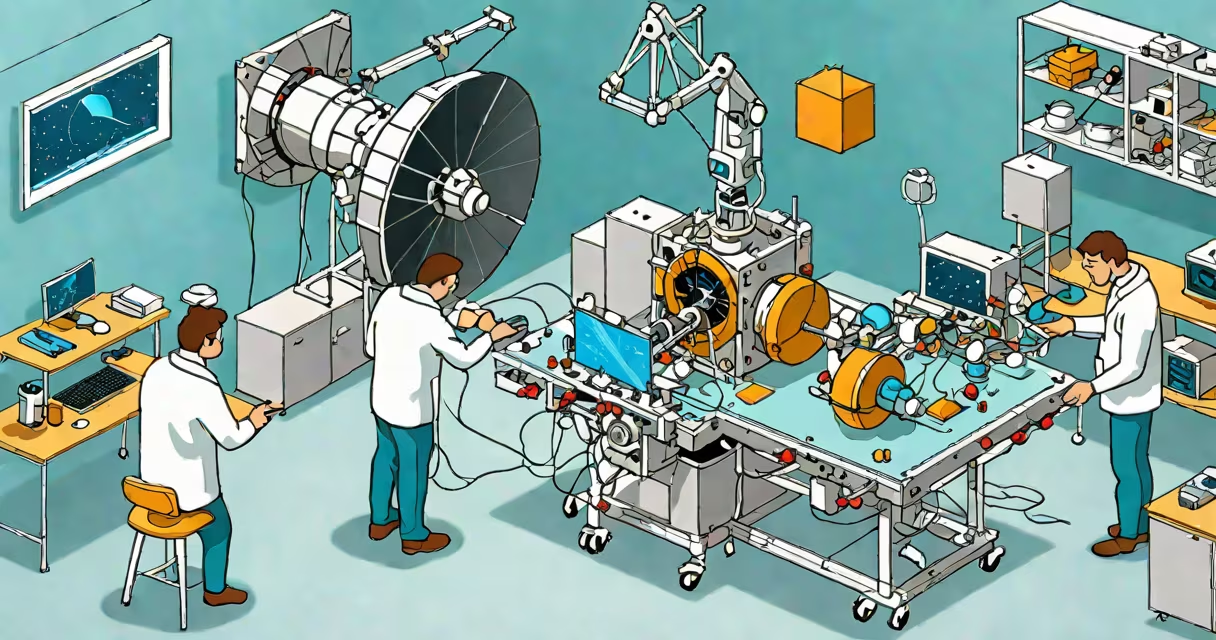
The program typically requires 30-36 credit hours, including core courses in aerodynamics, structural mechanics, and propulsion. Students choose electives based on their interests, such as satellite systems or unmanned aerial vehicles. Many programs include a thesis or capstone project, allowing students to apply their knowledge to real-world problems.
Most full-time students complete the degree in 1.5-2 years. Part-time options are available for working professionals. Admission usually requires a bachelor's degree in engineering or a related field, along with GRE scores and letters of recommendation.
Programs cover three primary areas:
Some universities offer specialized tracks, such as hypersonic flight or autonomous systems. For example, Georgia Tech's program includes coursework in additive manufacturing for aerospace components.
Graduates work in industries like commercial aviation, defense, and space exploration. According to the U.S. Bureau of Labor Statistics, employment for aerospace engineers is projected to grow 6%. The rise of private space companies, such as SpaceX and Blue Origin, has increased demand for skilled engineers.
Many graduates pursue careers in research and development, designing new aircraft or spacecraft. Others work in testing and evaluation, ensuring safety and performance standards. Government agencies like NASA and the FAA also hire aerospace engineers for regulatory and policy roles.
Some people confuse aerospace engineering with mechanical or electrical engineering. While these fields share some principles, aerospace engineering is distinct due to its focus on flight and space systems. For example, aerospace engineers must account for extreme temperatures and pressures encountered during space travel, which mechanical engineers rarely address.
Another misconception is that the field is limited to aircraft. In reality, aerospace engineers work on satellites, drones, and even space habitats. My colleague, who earned his MS in aerospace engineering, now designs propulsion systems for Mars rovers-a far cry from traditional airplane engineering.
Consider a student specializing in satellite systems. Their coursework might include orbital mechanics, antenna design, and space environment effects. For their thesis, they could develop a small satellite (CubeSat) to monitor climate change. After graduation, they might join a company like Planet Labs, which operates a fleet of Earth-imaging satellites.