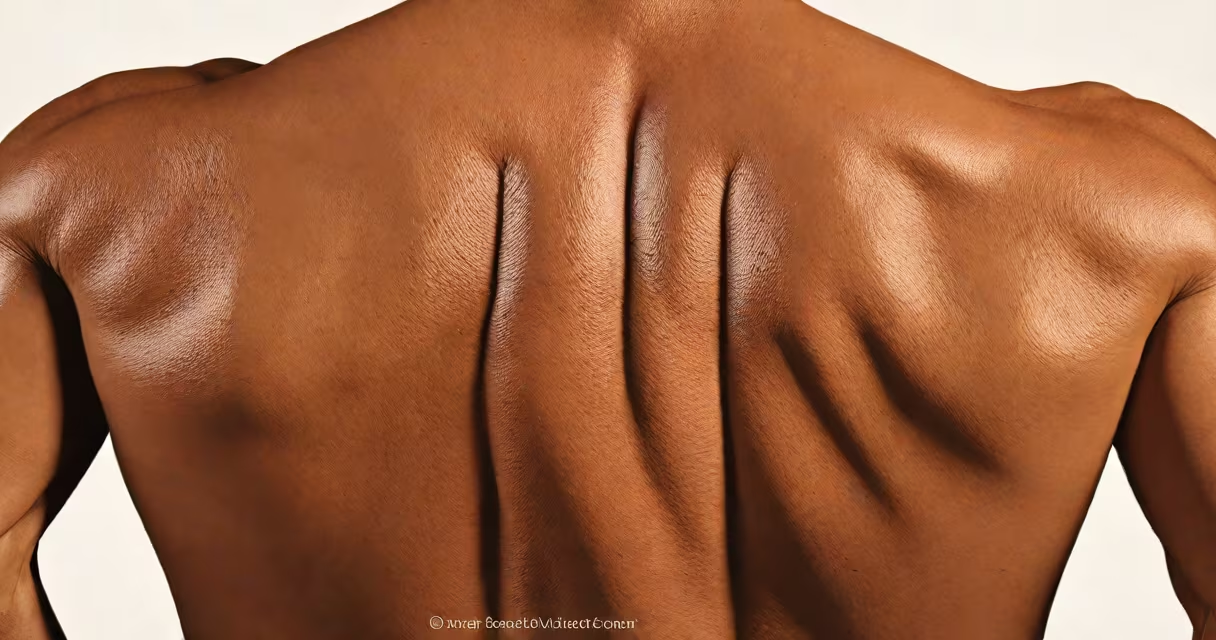
The muscles in chest and back form two major muscle groups that support movement, posture, and respiration. These include the pectoral muscles in the chest and the latissimus dorsi, trapezius, and rhomboids in the back.
Chest and back muscles work together to move your arms, stabilize your shoulders, and maintain proper posture. The pectoral muscles (pectoralis major and minor) help with arm flexion, adduction, and rotation. The latissimus dorsi, often called the "lats," assist with extension, adduction, and rotation of the shoulder joint. The trapezius and rhomboids help retract the scapula and support neck and shoulder movements.
These muscle groups include:
| Muscle Group | Primary Location | Key Functions |
|---|---|---|
| Pectoralis Major | Chest | Arm flexion, adduction, and internal rotation |
| Pectoralis Minor | Chest (beneath pectoralis major) | Stabilizes scapula, draws shoulder forward |
| Latissimus Dorsi | Lower back | Extends, adducts, and rotates the shoulder |
| Trapezius | Upper back and neck | Moves, stabilizes, and rotates scapula |
| Rhomboids | Upper back | Retracts and stabilizes scapula |
These muscles are important for daily activities like pushing, pulling, lifting, and reaching. Athletes rely on them for sports performance, while desk workers need them for maintaining good posture. For example, when you push a heavy door open, your pectoral muscles engage. When you pull a heavy object, your latissimus dorsi activates.
Many people confuse the muscles in chest and back with those in the arms or shoulders. While they work together, they serve distinct functions. Another common mistake is assuming that back pain solely originates from spinal issues, when tight or weak back muscles can also be the cause.
During a recent fitness challenge, I focused on strengthening my back and chest muscles. By incorporating exercises like push-ups, pull-ups, and rows, I noticed significant improvements in my posture and upper-body strength. However, I also learned the importance of balancing these workouts with stretches to prevent muscle imbalances and injuries.