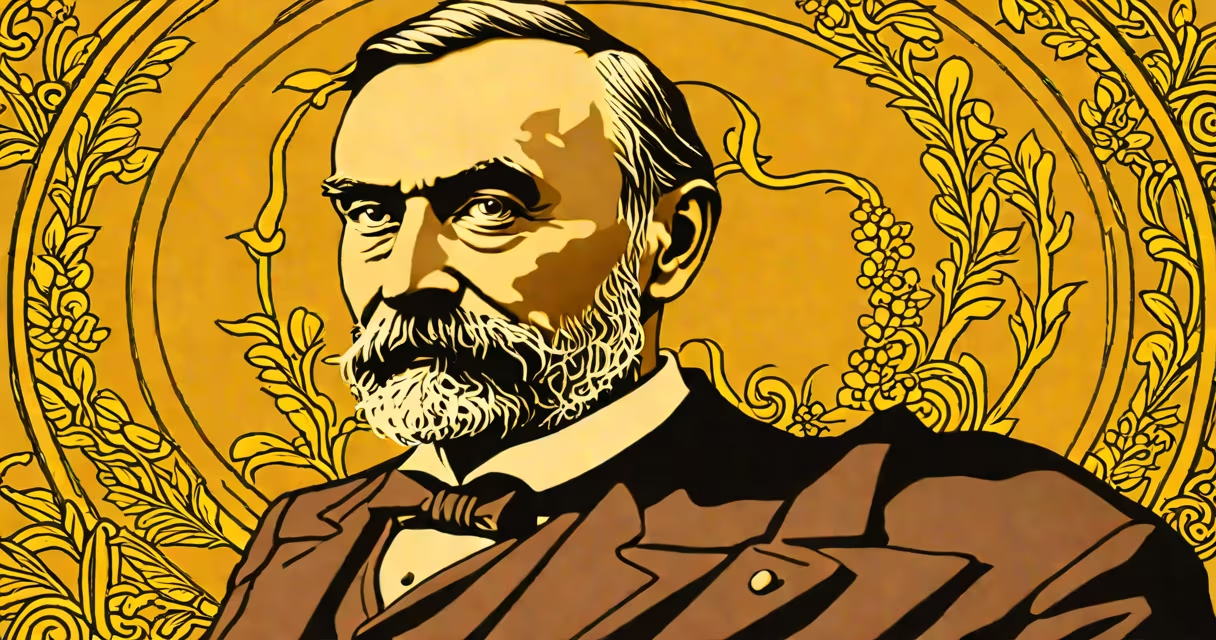
The Nobel Prize history begins with Alfred Nobel's 1895 will, which established annual awards for outstanding contributions to physics, chemistry, medicine, literature, and peace. The first Nobel Prizes were awarded in 1901, five years after Nobel's death.
Each year, the Nobel Foundation selects laureates based on recommendations from various institutions. For example, the Royal Swedish Academy of Sciences nominates candidates for the Physics and Chemistry Prizes. Winners receive a gold medal, a diploma, and a cash award, which was 11 million Swedish kronor (about $1.1 million) in 2023.
The Nobel Prize covers five original categories, plus an additional prize for economics established in 1968. Here's a breakdown:
| Category | Established | First Winner |
|---|---|---|
| Physics | 1901 | Wilhelm Conrad Röntgen |
| Chemistry | 1901 | Jacobus Henricus van 't Hoff |
| Medicine | 1901 | Emil von Behring |
| Literature | 1901 | Sully Prudhomme |
| Peace | 1901 | Henry Dunant |
| Economics | 1969 | Ragnar Frisch, Jan Tinbergen |
Many people assume the Nobel Prize is only for scientists and writers, but the Peace Prize often goes to activists and organizations. For instance, Malala Yousafzai received the Peace Prize in 2014 for her advocacy of girls' education., the Nobel Prize is not awarded posthumously unless the recipient dies after the announcement.
In 2023, the Nobel Prize in Physics was awarded to Pierre Agostini, Ferenc Krausz, and Anne L'Huillier for their work on attosecond physics. This field studies ultra-short time scales, allowing scientists to observe electron movements within atoms. The award highlighted the importance of understanding fundamental processes in quantum mechanics.
The Nobel Prize remains one of the most prestigious awards in the world, recognizing new achievements across various fields. It serves as both an honor and a motivation for future researchers and creators. The history of the Nobel Prize reflects the evolving priorities of science, literature, and global peace efforts.