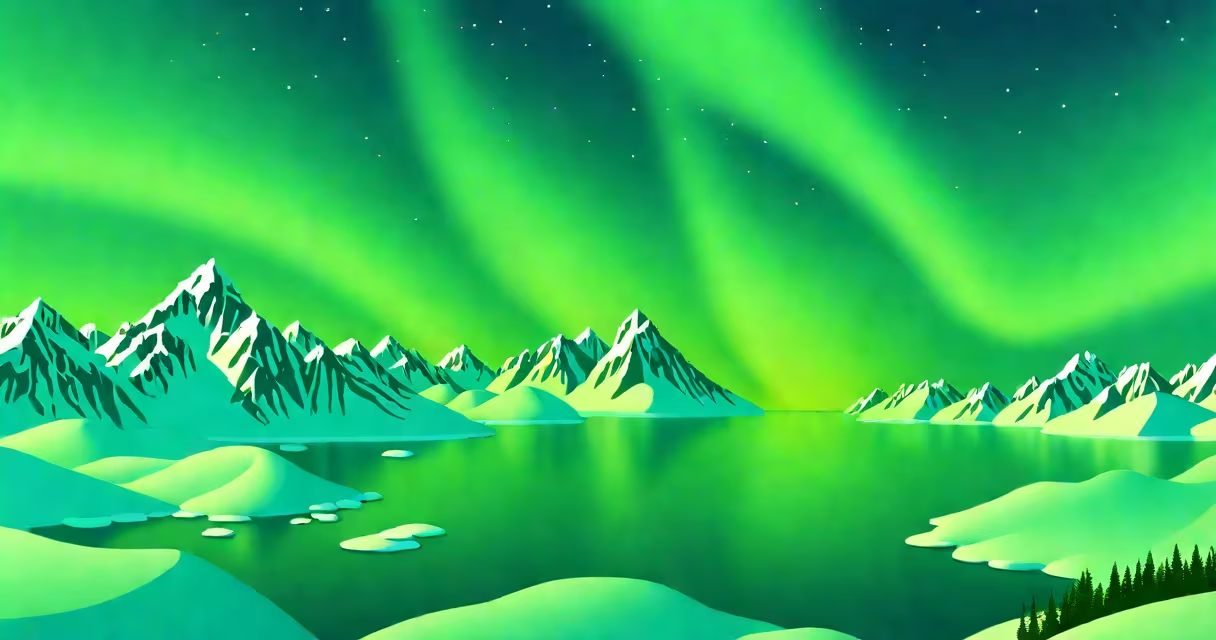
The northern lights in Alaska are natural light displays caused by solar particles interacting with Earth's magnetic field. This phenomenon, also called the aurora borealis, creates shimmering curtains of green, pink, and purple light in the night sky.
Solar wind carries charged particles from the sun toward Earth. When these particles collide with gases in our atmosphere, they transfer energy and create the glowing lights. Oxygen produces green and red hues, while nitrogen causes blue and purplish colors.
| Type | Appearance | Altitude |
|---|---|---|
| Arc | Curved band of light | 100-250 km |
| Rays | Vertical streaks | 250-400 km |
| Corona | Crown-like pattern | 100-300 km |
Fairbanks is one of the best places to view northern lights in Alaska due to its location under the auroral oval. Other prime locations include:
Fairbanks averages 243 days of possible aurora sightings per year. The best time to visit is from late August to early April.
Many people confuse northern lights with shooting stars or believe they only appear in winter. In reality, auroras occur year-round but are only visible on clear, dark nights. The best viewing conditions exist between 10 PM and 2 AM.
For the best experience, dress in layers and bring a camera with manual settings. Avoid city lights and find an open area with a clear view of the northern horizon. The University of Alaska Fairbanks Geophysical Institute provides real-time aurora forecasts.
I once witnessed an incredible aurora display near Chena Hot Springs. The lights danced across the sky for hours, creating an unforgettable spectacle. The experience far exceeded my expectations, and I recommend it to anyone visiting Alaska.