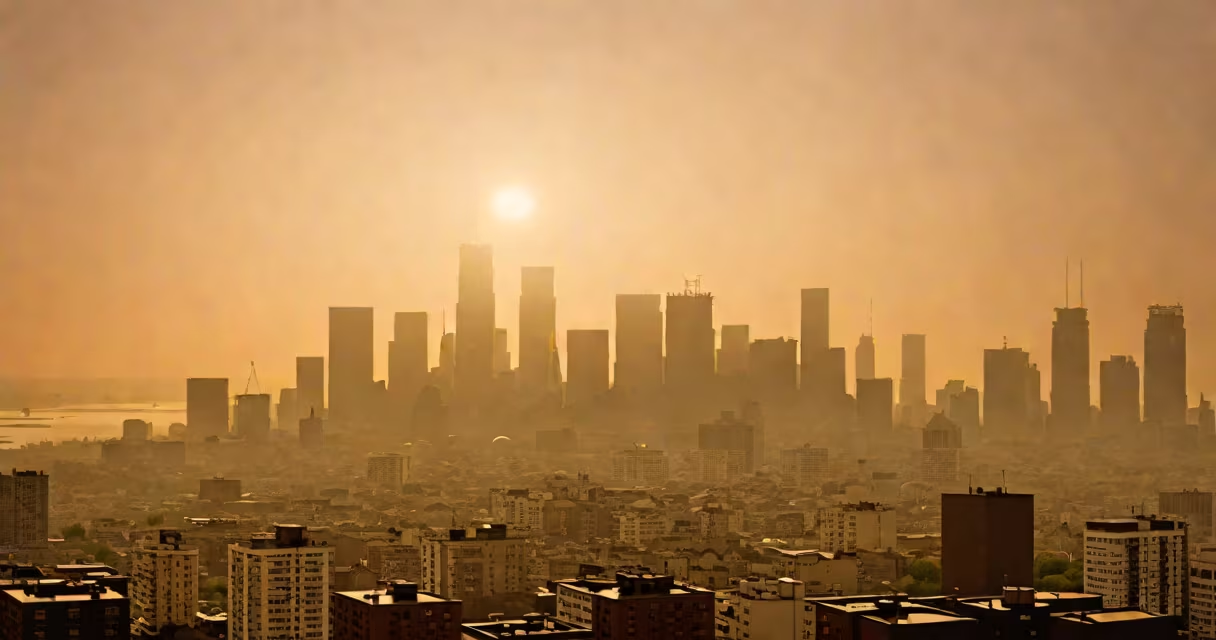
Ozone as an air pollutant refers to ground-level ozone (O₃), a colorless gas formed by chemical reactions between pollutants from cars, power plants, and industrial processes. Unlike the protective ozone layer in the upper atmosphere, ground-level ozone is harmful to human health and the environment.
Ground-level ozone forms when nitrogen oxides (NOₓ) and volatile organic compounds (VOCs) react with sunlight. These pollutants come from vehicle exhaust, industrial emissions, and chemical solvents. The process occurs most often on hot, sunny days, which is why ozone levels peak in summer.
The primary sources of ozone-forming pollutants are:
According to the Environmental Protection Agency (EPA), transportation accounts for about 70% of NOₓ emissions, making it the largest contributor to ozone formation.
Ozone pollution is most severe in urban areas with high traffic volumes and industrial activity. Cities like Los Angeles, Houston, and Atlanta frequently exceed the EPA's ozone standards. Rural areas can also experience high ozone levels due to long-range transport of pollutants and natural emissions from forests.
Exposure to ozone pollution can cause respiratory problems, including coughing, throat irritation, and reduced lung function. Long-term exposure increases the risk of asthma, bronchitis, and premature death. Ozone also damages crops and vegetation, reducing agricultural yields by up to 10% in some regions, according to a study published in Science Advances.
I've seen the effects firsthand while working in urban air quality monitoring. On high-ozone days, even healthy individuals experience shortness of breath during outdoor activities.
To minimize exposure to ozone pollution:
Ground-level ozone is often confused with the ozone layer in the stratosphere, which protects Earth from harmful UV radiation. While the ozone layer is beneficial, ground-level ozone is a harmful pollutant formed by human activities and chemical reactions.
For more details on ozone levels, check the ozone air quality index to stay informed about local conditions.