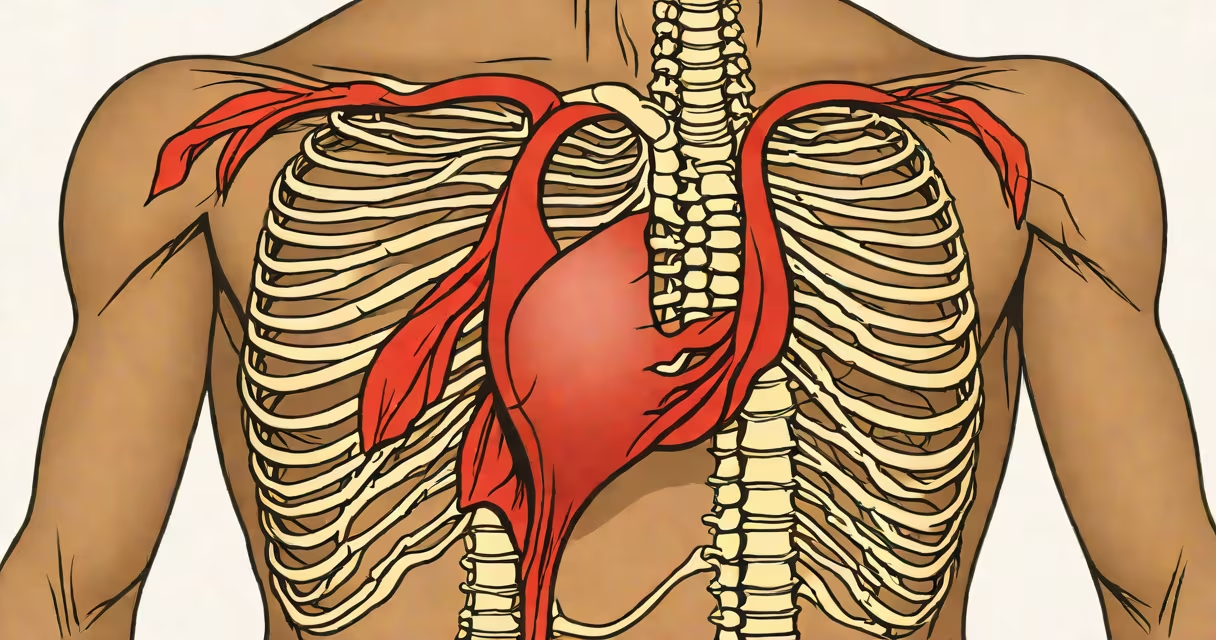
Pain in the sternum that worsens with deep breaths typically results from muscle strain, inflammation, or injury to the chest wall. While often harmless, sudden or severe pain may indicate a heart attack or other serious condition requiring emergency care.
The sternum connects your ribs via cartilage, forming part of your chest wall. Deep breathing expands your rib cage, putting pressure on these structures. When inflamed or injured, this movement causes sharp pain. The vagus nerve, which runs near the sternum, can also trigger referred pain if irritated.
Most cases stem from benign conditions:
Serious causes include aortic dissection, pulmonary embolism, or heart attack. These require immediate medical attention.
Many people assume sternum pain always indicates heart problems. However, cardiac-related pain usually spreads to shoulders/arms and feels like pressure or squeezing-not sharp pain when breathing. Another myth is that costochondritis only affects older adults, but it's common in teenagers and young adults.
| Symptom | Likely Cause | Action |
|---|---|---|
| Sharp pain worsening with deep breaths | Costochondritis or muscle strain | Rest, ice, and over-the-counter pain relievers |
| Sudden, severe pain radiating to back | Aortic dissection | Call 911 immediately |
| Pressure/squeezing with nausea, sweating | Possible heart attack | Seek emergency care |
If pain persists beyond a few weeks or worsens, consult a doctor. Diagnostic tests may include X-rays, EKGs, or blood tests.
Last winter, I developed sternum pain after shoveling snow. Deep breaths triggered sharp stabs near my breastbone. A doctor diagnosed costochondritis, which resolved with rest and ibuprofen within two weeks. The key was avoiding activities that aggravated it while breathing deeply.
To reduce risk: