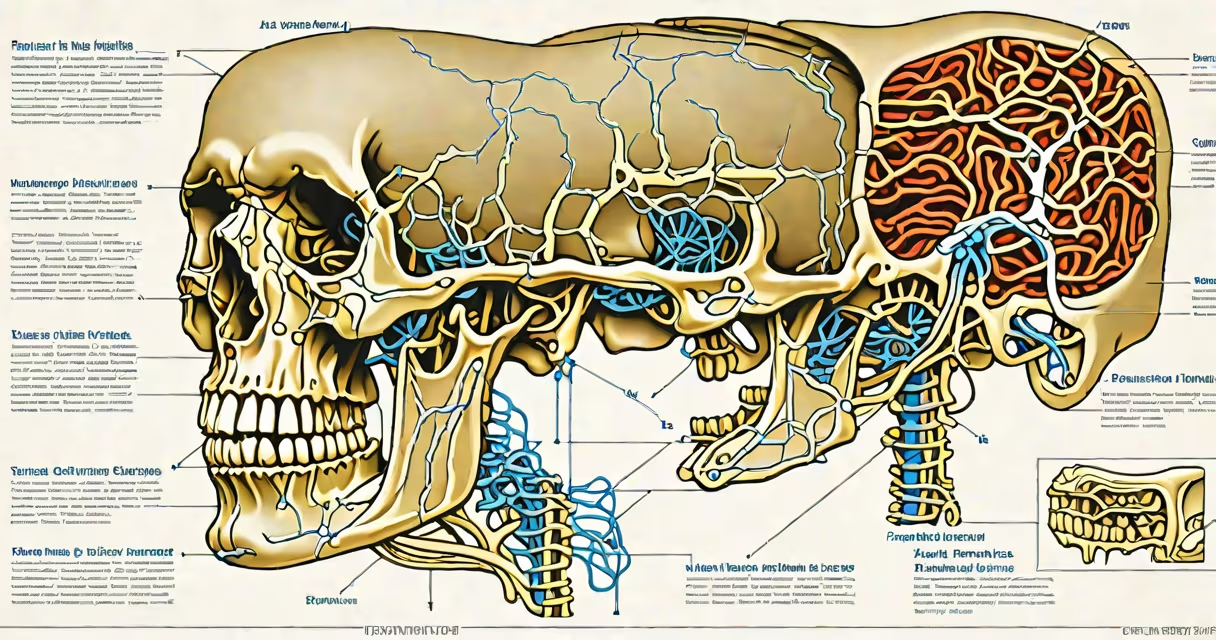
A toothache causing temple pain happens when dental nerves trigger nearby branches of the trigeminal nerve, sending pain signals to your temples. This referred pain is common with severe cavities, abscesses, or TMJ disorder.
The trigeminal nerve has three main branches: one serves the upper teeth and sinuses, another the lower teeth, and the third the face including temples. When dental pain activates these nerve pathways, it creates a sensation in areas far from the original problem.
For example, a cavity in an upper molar often sends pain to the temple because the tooth's nerve connects directly to the temple branch through shared neural pathways. This explains why many people mistake tooth-related headaches for migraines or tension headaches.
Tooth-related temple pain typically falls into three categories:
| Type | Common Cause | Key Feature |
|---|---|---|
| Dental abscess | Untreated cavity reaching pulp | Throbbing pain, often worse at night |
| Cracked tooth | Trauma or grinding | Sharp pain when chewing |
| TMJ disorder | Jaw misalignment | Pain when moving jaw |
Unlike migraines or tension headaches, tooth-related temple pain:
Most people notice their temple pain started shortly after developing a toothache. The pain often feels deeper than surface headaches and may include sensitivity to temperature changes.
Visit a dentist immediately if you experience:
I once treated a patient who thought she had a migraine for weeks until we discovered an abscess in her upper molar. The pain radiated to her temple and eye, mimicking classic migraine symptoms perfectly. Only a thorough dental exam revealed the true source.
Dentists typically treat tooth-related temple pain by addressing the underlying dental issue:
Over-the-counter pain relievers may provide temporary relief, but they won't solve the underlying dental problem causing the temple pain.
Most cases of temple pain from toothache resolve completely once the dental issue is properly treated. The key is identifying the source early before the pain becomes severe.
For more about how tooth pain affects different facial areas, see our guide on face pain from toothache. And for information about ear pain related to toothaches, read this article.