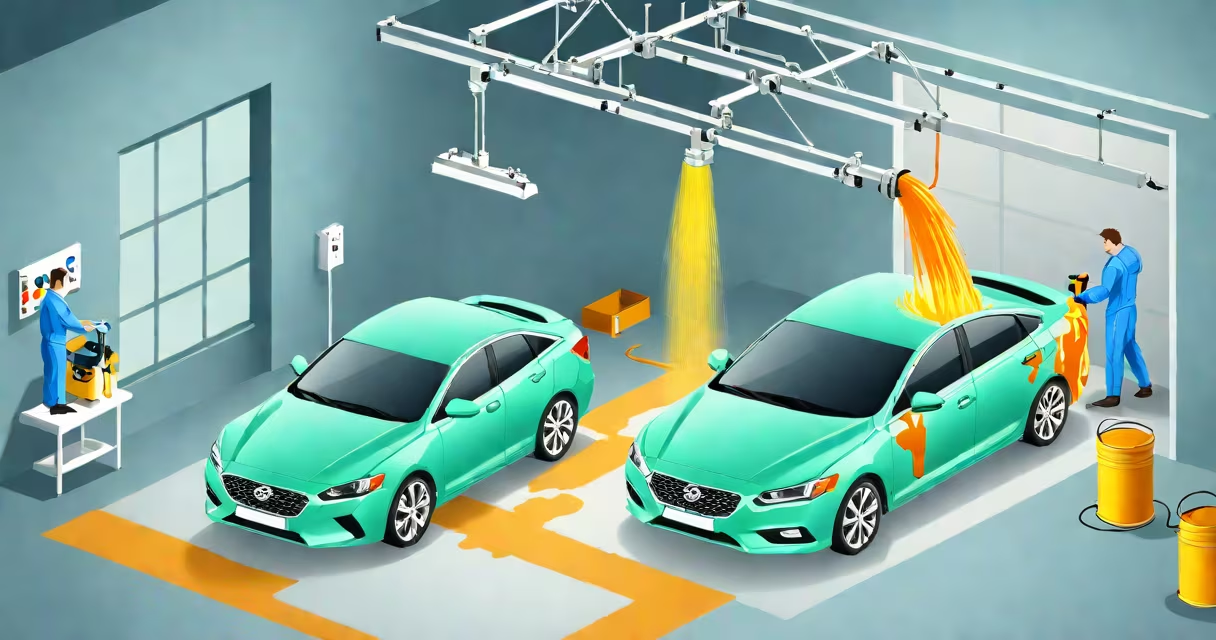
Paint for cars is a durable, protective coating applied to vehicles to improve appearance and prevent corrosion. It typically consists of primer, basecoat, and clearcoat layers.
Automotive paint systems create a barrier against environmental damage while providing color and shine. The primer layer adheres to the metal surface, the basecoat provides color, and the clearcoat offers UV protection and gloss.
Modern car paints often contain ceramic particles or other additives to improve durability and scratch resistance. Some high-performance paints can last 10 years or more without significant fading.
Car paint comes in several formulations, each suited to different applications:
| Type | Composition | Common Uses |
|---|---|---|
| Acrylic enamel | Solvent-based acrylic resin | Classic cars, restoration projects |
| Urethane | Polyurethane resin | Most modern vehicles, OEM applications |
| Waterborne | Water-based acrylic | Environmentally friendly option, growing in popularity |
| Acrylic spray paint | Sprayable acrylic formulation | Touch-ups, small repairs, DIY projects |
Automotive paint serves both functional and aesthetic purposes. It protects metal surfaces from rust and corrosion while giving vehicles their distinctive colors and finishes. Paint is applied in factory settings during manufacturing and in body shops during repairs.
Professional painters often use spray guns in controlled environments to ensure even application and proper curing. The process requires multiple coats and careful preparation, including sanding and masking off areas not being painted.
Many people believe that all car paints are the same, but formulations vary based on vehicle type and intended use. Another myth is that darker colors hide scratches better - in reality, lighter colors often show less wear over time due to better UV resistance.
Contrary to popular belief, not all car paints require weeks to fully cure. Some modern urethane paints reach full hardness in just a few days under ideal conditions.
The standard process begins with surface preparation, including sanding and cleaning. A primer is then applied to create adhesion and fill imperfections. Next comes the basecoat, which provides color, followed by the clearcoat for protection and shine.
Each layer must dry properly before the next is applied. Temperature and humidity affect drying times, with ideal conditions typically around 70°F (21°C) and 50% humidity. Some high-performance paints may require baking at specific temperatures to achieve optimal curing.