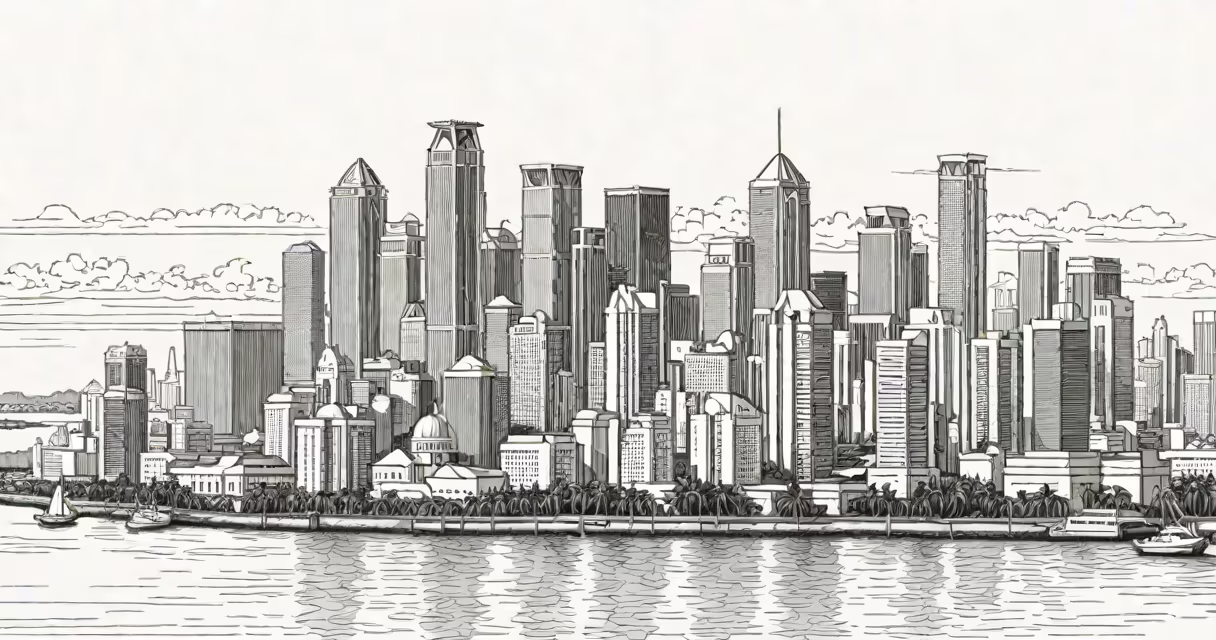
Panama City is the capital and largest city of Panama, located at the Pacific entrance of the Panama Canal. It serves as the country's political, economic, and cultural hub.
Panama City sits on the isthmus connecting North and South America. The city's strategic position between the Atlantic and Pacific Oceans makes it a important global trade hub. The Panama Canal, a important waterway, runs through the city, impacting its development and economy.
The city was founded in 1519 by Spanish conquistador Pedro Arias Dávila. Originally named "Ciudad de Panamá," it became a key port for Spanish trade routes. Over centuries, Panama City evolved into a cosmopolitan metropolis, blending colonial architecture with modern infrastructure.
Panama City is divided into several districts, each with unique characteristics:
The city's economy thrives on commerce, banking, and tourism. The Panama Canal Authority generates significant revenue, while the Colón Free Trade Zone, just west of the city, is a major hub for international trade., Panama City hosts numerous multinational corporations and financial institutions.
Visitors can explore different attractions, including:
Panama City boasts modern infrastructure, including the Metro system, one of the most advanced in Latin America. Tocumen International Airport connects the city to global destinations. The city's road network facilitates easy access to various parts of the country.
The city experiences a tropical climate with consistent temperatures year-round. The dry season runs, while the wet season lasts. Despite the humidity, the city remains a popular destination due to its vibrant atmosphere and rich cultural offerings.
Many people confuse Panama City with the country of Panama itself. While the city is the capital, it represents only a small part of the country's diverse landscapes and cultures., some assume the city lacks historical significance, overlooking its rich colonial past and key role in global trade.
During a visit to Panama City, I explored Casco Viejo and was struck by the blend of old and new. The cobblestone streets and colonial buildings contrasted sharply with the modern skyscrapers visible in the distance. This juxtaposition highlights the city's changing evolution over centuries.