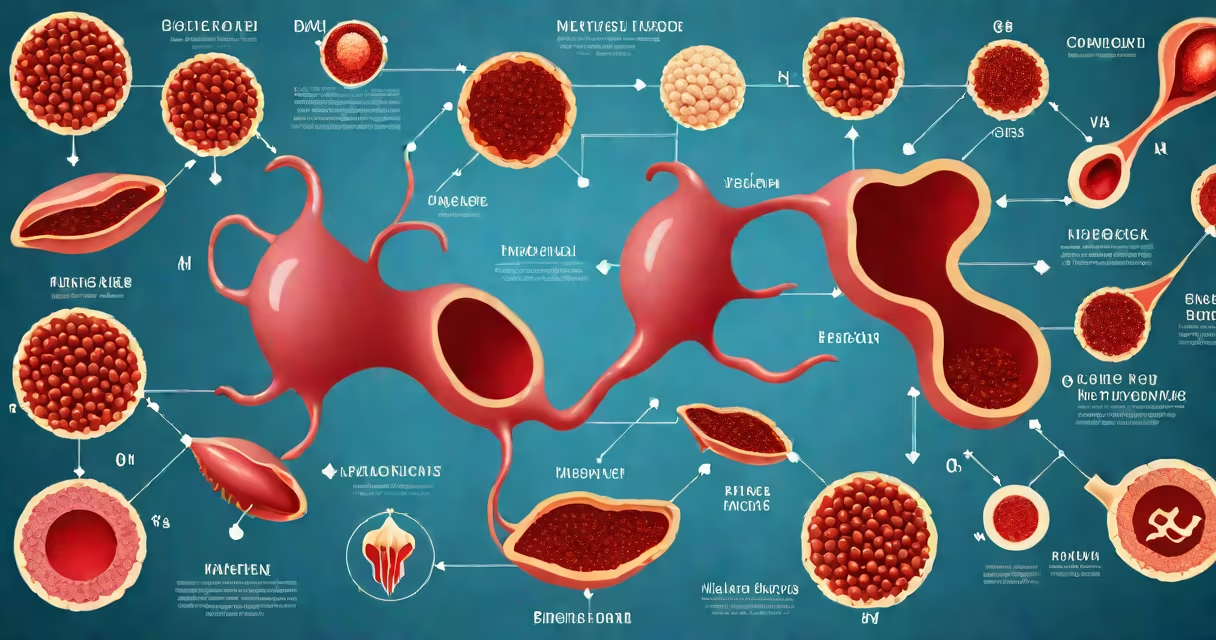
Passing large blood clots during menstruation typically means you're losing more than 80ml of blood-more than a normal period. These clots form when blood loss is heavy enough to prevent anti-clotting agents in vaginal blood from working effectively.
During a heavy flow, blood cells don't have time to properly mix with anticoagulant proteins. The result is semi-solid clumps of blood cells and tissue. Most menstrual clots measure less than an inch; anything larger may indicate an underlying issue.
The most common cause is simply having a heavy period. Other triggers include:
Consult a healthcare provider if you experience any of these symptoms alongside clots larger than a quarter:
According to the American College of Obstetricians and Gynecologists, prolonged heavy bleeding (7+ days) warrants medical evaluation.
Your doctor will likely ask about your medical history and perform a pelvic exam. Tests may include:
Treatment options range from hormonal birth control to surgical interventions for underlying conditions.