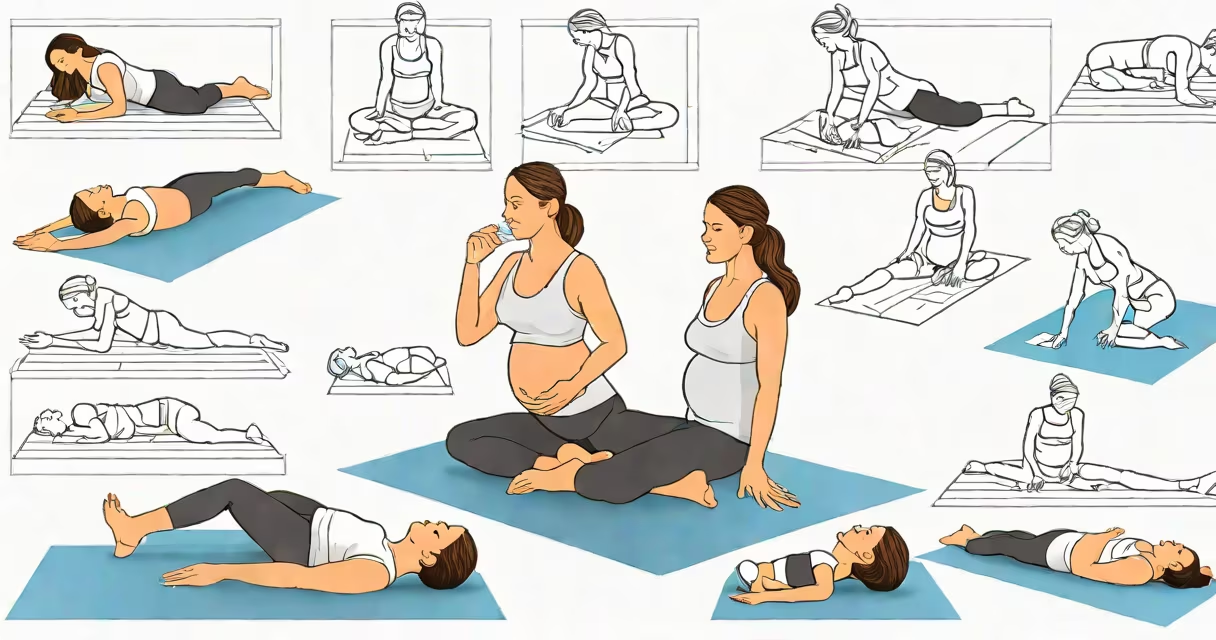
Pregnancy breathing exercises are controlled breathing techniques designed to reduce stress, ease labor pain, and improve oxygen flow to both mother and baby. These exercises strengthen respiratory muscles and promote relaxation through focused breathwork.
Breathing exercises work by engaging the diaphragm and other respiratory muscles, which improves lung capacity and oxygen efficiency. During pregnancy, hormonal changes and the growing uterus can compress the diaphragm, making deep breathing more challenging. Regular practice helps maintain optimal oxygen levels, which are important for fetal development and maternal comfort.
The most common types of pregnancy breathing exercises include:
Pregnant women can use breathing exercises throughout their pregnancy, but they are particularly beneficial during the third trimester and labor. These exercises help manage stress, improve sleep, and prepare the body for childbirth. During labor, controlled breathing can reduce pain perception and provide a sense of control.
Many people assume that breathing exercises are only useful during labor. However, they offer significant benefits throughout pregnancy, such as reducing anxiety and improving well-being. Another misconception is that these exercises are time-consuming; even a few minutes daily can make a noticeable difference.
To practice diaphragmatic breathing, sit comfortably with your back straight. Place one hand on your chest and the other on your abdomen. Inhale deeply through your nose, ensuring your abdomen expands while keeping your chest relatively still. Exhale slowly through your mouth, feeling your abdomen contract. Repeat this cycle for 5-10 minutes, focusing on steady, controlled breaths.
Incorporating these exercises into a daily routine can improve both physical and emotional well-being during pregnancy. For more detailed guidance, consult a healthcare provider or prenatal yoga instructor.