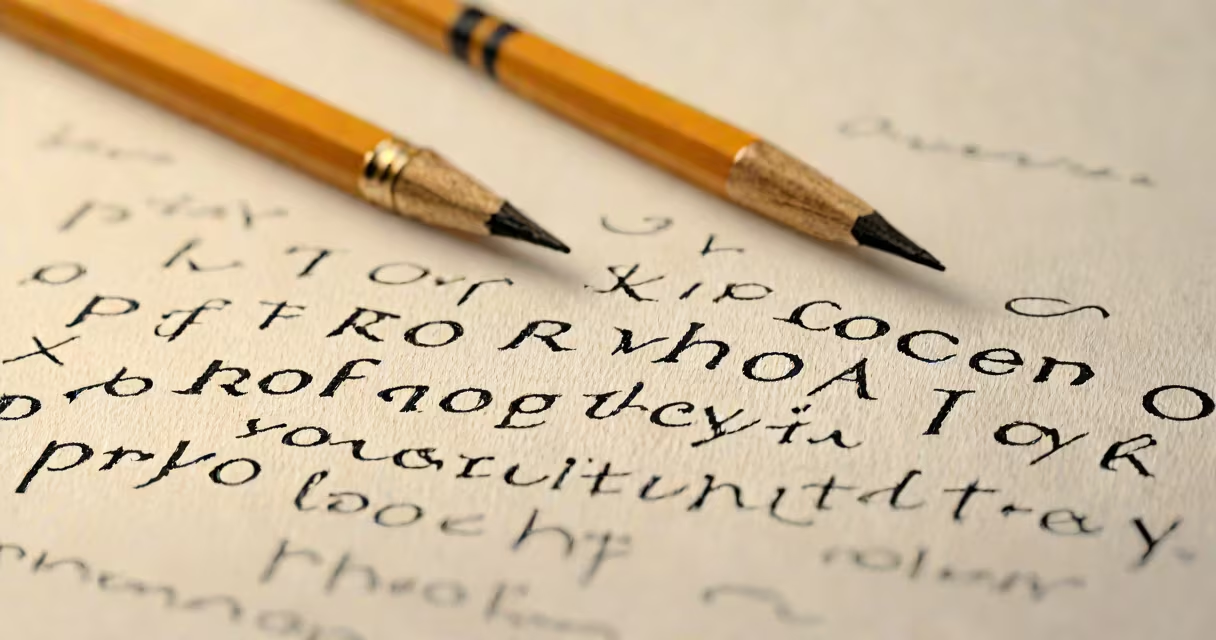
Pronunciation key symbols are written markers that show how words sound in a specific language. They appear alongside words in dictionaries, textbooks, and language apps to indicate sounds not represented by standard spelling.
These symbols use standardized systems like the International Phonetic Alphabet (IPA) to represent sounds. For example, the word "ship" might appear with /ʃɪp/ in a pronunciation key, showing the "sh" sound as /ʃ/ and the short "i" as /ɪ/. Most systems place the key above, below, or beside the word it describes.
| Type | Examples | Usage |
|---|---|---|
| International Phonetic Alphabet (IPA) | /p/, /b/, /t/, /d/ | Most dictionaries, academic texts |
| Respiratory Phonetics | [p], [b], [t], [d] | Linguistics, speech therapy |
| Simplified Transcription | \sh\, \ch\, \zh\ | Language learning apps, beginner materials |
Pronunciation keys appear in dictionaries like Merriam-Webster and Oxford, language learning platforms such as Duolingo, and textbooks. They help learners pronounce words correctly, especially in languages with complex spelling-to-sound rules like French or English. Without them, non-native speakers might mispronounce words like "knight" (/naɪt/) or "colonel" (/kərnl/).
Many people confuse pronunciation keys with accent marks or stress markers. While accent marks (like é in café) modify letters, pronunciation keys represent entire sounds. Stress markers (like ' in con'tract) show emphasis, not pronunciation. Another mistake is assuming all languages use the same system-some, like Chinese, rely on pinyin (拼音) instead of IPA.
I once helped a Spanish learner pronounce "juego" (game) using IPA: /xweɡo/. Without the key, they had been saying /hweɡo/, which sounded like "huego" to native ears. The correct symbol /x/ showed the guttural sound needed.
Start by learning common symbols for vowels (like /i/, /æ/, /u/) and consonants (like /θ/ for "th" in "think"). Practice with online tools such as the IPA website or apps like El Prat IPA. Repetition and listening to native speakers will improve recognition.
Pronunciation key symbols bridge the gap between written and spoken language. By mastering them, learners gain confidence in accurate speech.