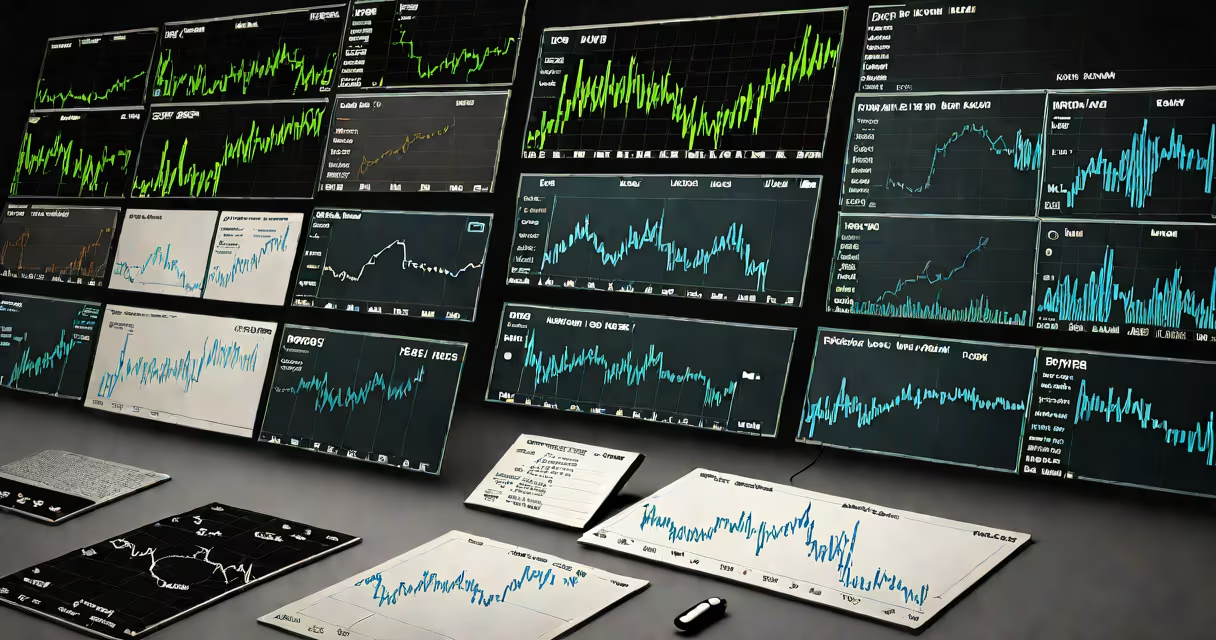
A real time stock market index is a weighted average of selected stock prices, updated continuously during trading hours to reflect current market conditions. These indices provide instant snapshots of market performance.
Stock market indices like the S&P 500 or Nasdaq Composite are calculated using formulas that adjust for stock splits, corporate actions, and price changes. The index value updates whenever constituent stocks trade, offering a live pulse of the market.
For example, the Dow Jones Industrial Average uses a price-weighted method, while the S&P 500 is market-cap-weighted. Each method affects how much each stock influences the index. The Nasdaq Composite, which includes Nvidia stock, is also market-cap-weighted and reflects the performance of over 3,000 securities listed on the Nasdaq exchange.
| Index Name | Composition | Weighting Method |
|---|---|---|
| Dow Jones Industrial Average | 30 large publicly traded companies | Price-weighted |
| S&P 500 | 500 leading companies | Market-cap-weighted |
| Nasdaq Composite | Over 3,000 securities | Market-cap-weighted |
Investors rely on real-time indices for several critical functions:
For instance, during the 2024 tech sector rally, the Nasdaq Composite surged by 5% in a single week, influencing millions of trading decisions. This highlights how real-time indices drive market behavior.
Many people confuse real-time indices with delayed data feeds or end-of-day calculations. Unlike delayed feeds, real-time indices update continuously during trading hours. For example, the S&P 500's intraday value differs from its official closing price.
Another mistake is assuming all indices cover the entire market. The Dow Jones focuses on industrial giants, while the Russell 2000 tracks small-cap stocks. Each serves different investment goals.
Market data providers like Bloomberg and Reuters collect real-time stock prices from exchanges worldwide. They aggregate this data to compute index values, ensuring accuracy and speed. For example, the New York Stock Exchange (NYSE) and Nasdaq provide direct feeds to these providers.
In my experience, using real-time stock scanners to monitor these indices helps identify trends early. For instance, a sudden drop in the S&P 500 often precedes broader market declines, giving traders time to react.
Real-time stock market indices are essential tools for investors, providing continuous updates on market performance. Whether tracking the Dow Jones, S&P 500, or Nasdaq Composite, these indices help investors make informed decisions. Understanding how they work and why they matter can improve investment strategies.