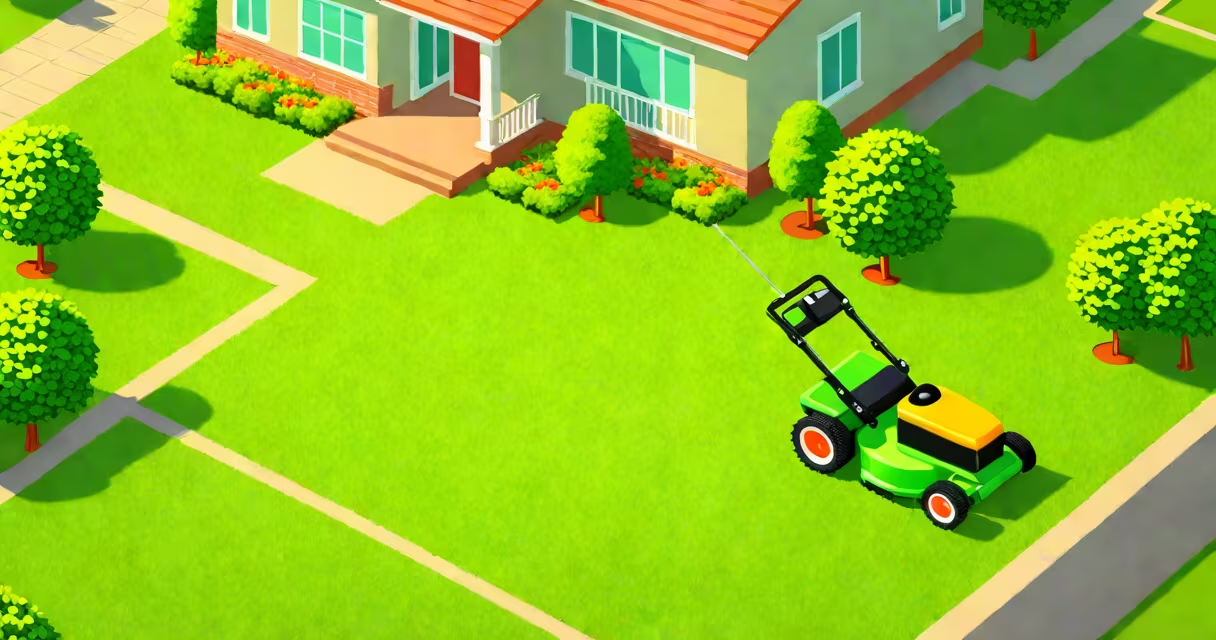
A remote lawn mower is an automated grass-cutting machine controlled via a handheld device or smartphone app. These battery-powered robots go through lawns independently, trimming grass while the user supervises from a distance.
Most models use a combination of sensors, GPS, and boundary wires to go through lawns. The user sets a schedule or manually controls the mower via an app. When the mower detects tall grass, it adjusts its blades accordingly. Some advanced models even learn the layout of your lawn over time.
| Type | Control Method | Best For |
|---|---|---|
| Robotic Mowers | App or remote control | Small to medium lawns |
| Hybrid Mowers | Manual push with remote cutting control | Large lawns with slopes |
| Autonomous Mowers | Scheduled autonomous cutting | Regular maintenance of medium lawns |
Many people think remote lawn mowers are only for small lawns. However, models like the Husqvarna Automower can handle lawns up to 2.5 acres. Another myth is that these mowers can't handle slopes. In reality, many can manage inclines up to 35%.
I tested the Robomow RC300 on my 0.5-acre lawn with a 20% slope. It handled the terrain well, though I had to adjust the boundary wires a few times to ensure full coverage.
Remote lawn mowers save time and reduce physical effort. They're also quieter than traditional gas mowers, operating at around 60 decibels compared to 90+ decibels for gas models. According to the University of California, Davis, robotic mowers can reduce noise pollution by up to 50%.
They provide consistent cutting, which promotes healthier grass growth. The mulching function returns clippings to the lawn as fertilizer, reducing waste and enhancing soil health.
Remote lawn mowers are a practical solution for those seeking efficient, low-effort lawn care. With advancements in technology, these machines are becoming more capable and user-friendly, making them a worthwhile investment for homeowners.