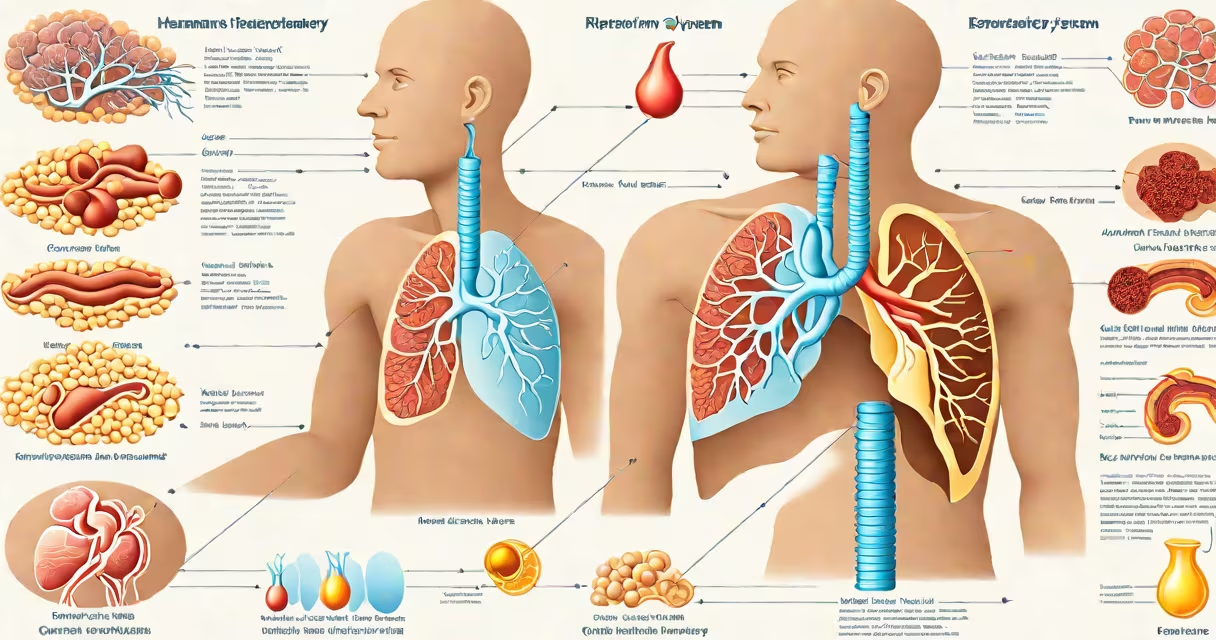
A respiratory system diagram labeled identifies the organs and structures that move air into and out of your body and exchange gases with your bloodstream. These diagrams typically show the nasal cavity, trachea, bronchi, lungs, and diaphragm.
The respiratory system delivers oxygen to your blood and removes carbon dioxide. This happens through inhalation (breathing in) and exhalation (breathing out). When you inhale, air travels through your nasal cavity or mouth, down the trachea, and into the bronchi, which branch into smaller tubes called bronchioles. These lead to tiny air sacs called alveoli in your lungs, where gas exchange occurs.
The respiratory system includes both upper and lower parts. The upper respiratory tract consists of the nose, nasal passages, sinuses, and throat. The lower respiratory tract includes the trachea, bronchi, lungs, and diaphragm. Here's a breakdown of key components:
| Part | Function |
|---|---|
| Nasal Cavity | Warms, filters, and moistens incoming air |
| Pharynx | Passageway for air moving |
| Larynx | Contains vocal cords and directs air to the trachea |
| Trachea | Windpipe that carries air to the bronchi |
| Bronchi | Two main branches leading to each lung |
| Lungs | Contain alveoli for gas exchange |
| Diaphragm | Muscle that helps with breathing |
A labeled respiratory system diagram helps visualize how air moves through your body and highlights areas prone to disease. For example, asthma affects the bronchi and bronchioles, while pneumonia impacts the alveoli. Diagrams are also essential for medical students and healthcare professionals to understand respiratory conditions and treatments.
I once used a detailed respiratory system diagram to explain asthma to a patient. The visual helped them grasp how their medication targeted specific parts of their airways, making the explanation clearer and more effective.
Many people confuse the respiratory system with the circulatory system. While both are important for gas exchange, the respiratory system handles oxygen intake and carbon dioxide removal, whereas the circulatory system transports these gases via the blood. Another mistake is assuming the lungs are the only organs involved in breathing. The diaphragm and other muscles also play important roles.
The American Lung Association provides detailed diagrams and explanations of respiratory anatomy and function. For a complete overview, consult their educational materials or medical textbooks focused on respiratory health.