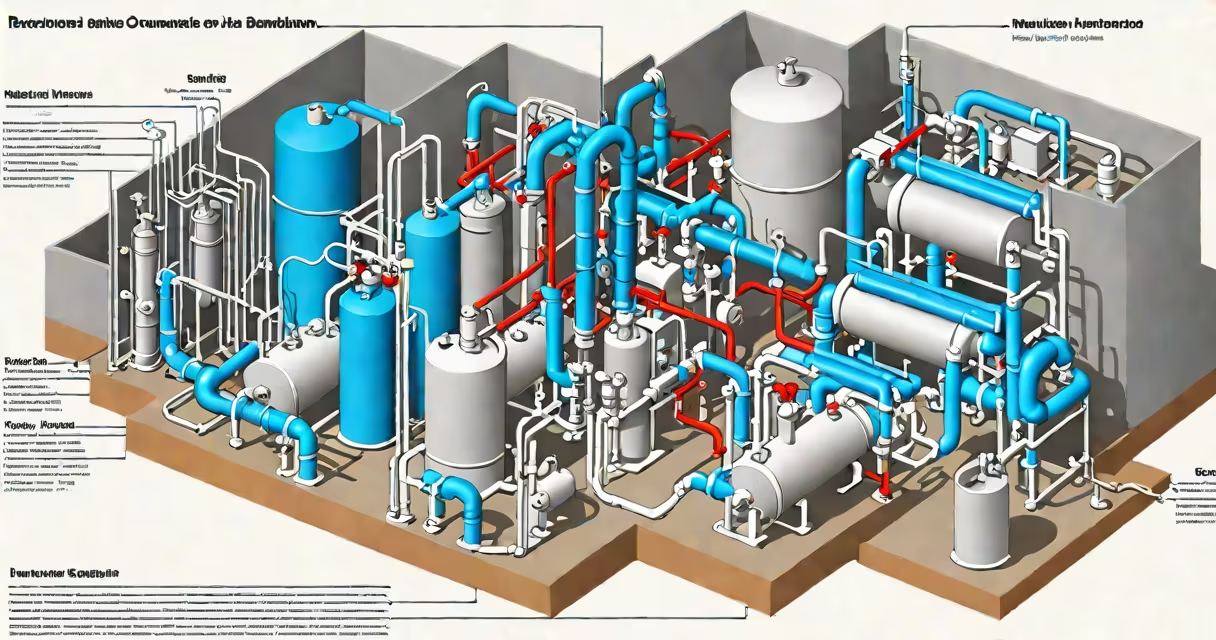
A reverse osmosis plant is a water treatment system that uses high pressure to force water through semipermeable membranes, removing dissolved solids, bacteria, and chemicals. These systems produce highly purified water for drinking, industrial processes, and desalination.
Reverse osmosis (RO) operates by pushing water through a membrane that blocks contaminants while allowing water molecules to pass. The process requires significant pressure-typically 40-100 psi-to overcome osmotic pressure, which naturally draws water toward higher concentrations of solutes.
The membrane in an RO system consists of thin-film composite material, designed to reject particles as small as 0.0001 microns. Water enters the system under pressure, passes through the membrane, and exits as purified permeate, while contaminants are flushed away as concentrate.
| Component | Function |
|---|---|
| Pre-treatment | Removes large particles, chlorine, and other contaminants that could damage the membrane. |
| High-pressure pump | Forces water through the membrane at the required pressure. |
| Semipermeable membrane | Filters out dissolved solids, bacteria, and viruses. |
| Post-treatment | Adjusts pH and adds minerals if needed, improving taste and safety. |
Reverse osmosis plants are used in various industries due to their effectiveness in water purification. Common applications include:
Some believe reverse osmosis removes all beneficial minerals from water. While RO does strip minerals like calcium and magnesium, post-treatment stages can reintroduce them., RO systems do not effectively remove volatile organic compounds (VOCs) or certain pesticides, requiring additional filtration methods.
Another misconception is that RO systems are only for large-scale industrial use. In reality, compact reverse osmosis systems are available for home use, providing clean drinking water without the need for bottled water.
Unlike activated carbon filters, which absorb chemicals, RO physically blocks contaminants. It is more effective than distillation, which requires energy-intensive boiling and condensation. However, RO systems are slower and require more maintenance than simple sediment filters.
For those considering alkaline water filters, reverse osmosis offers superior purification but may require remineralization steps to restore beneficial minerals.
RO water is safe to drink and free from harmful contaminants. However, some argue that the lack of minerals may reduce water's health benefits. Post-treatment remineralization can address this concern, ensuring the water remains both pure and nutritious.
For most people, RO water is a healthy choice, especially in areas with contaminated tap water. However, those with specific dietary needs may want to consider remineralization or alternative filtration methods.