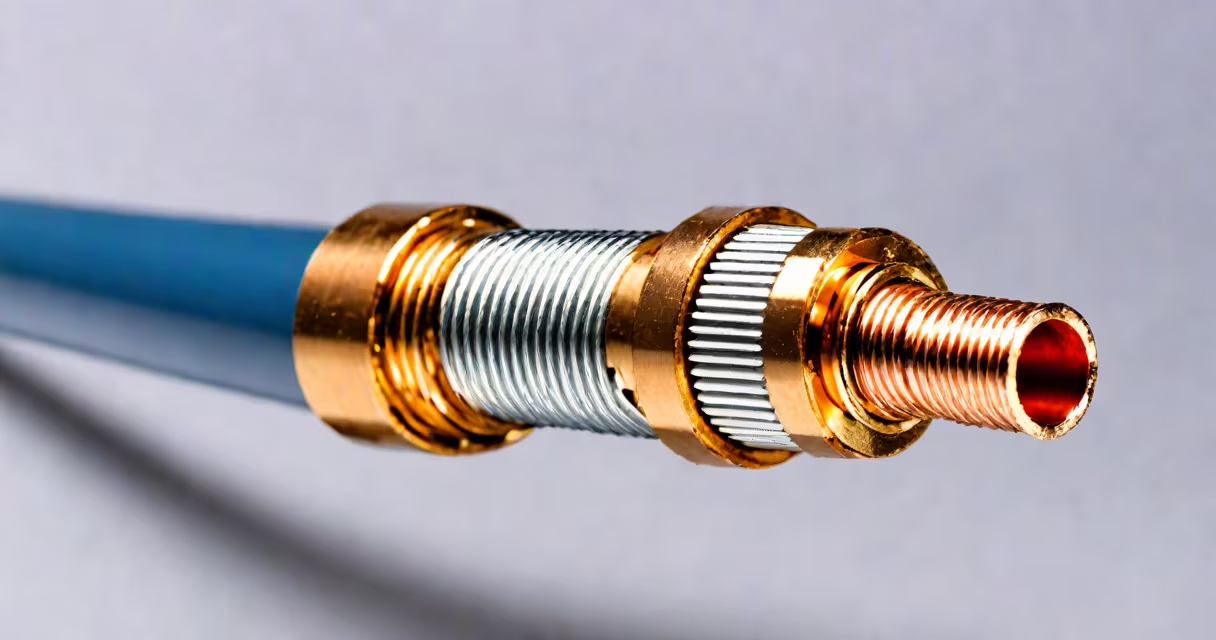
RG6 coax cable internet transmits broadband signals through a shielded copper conductor, minimizing interference for high-speed connectivity. This cable type is widely used for cable television, internet, and satellite signals due to its superior performance compared to thinner RG59 cables.
RG6 coax cable consists of four layers: a solid copper core, a dielectric insulator, an aluminum foil shield, and a PVC outer jacket. The copper core carries the electrical signal, while the dielectric insulator maintains signal integrity. The aluminum foil shield blocks external interference, and the PVC jacket protects the internal components from physical damage.
| Type | Shielding | Conductor Material | Typical Use |
|---|---|---|---|
| RG6 Quad Shield | Double aluminum foil + braided copper | Copper-clad steel | High-interference areas |
| RG6 Dual Shield | Aluminum foil + braided copper | Solid copper | Standard installations |
| RG6 Single Shield | Aluminum foil | Copper-clad steel | Budget installations |
RG6 coax cable is primarily used for cable TV, internet, and satellite connections. Its thicker construction and better shielding make it ideal for long-distance signal transmission with minimal loss. For example, a typical home internet setup might use RG6 cable to connect the modem to the wall outlet, ensuring a stable connection even in areas with high electromagnetic interference.
Many people confuse RG6 with RG59 cable, assuming they are interchangeable. However, RG59 has a smaller diameter and less shielding, making it unsuitable for high-frequency signals like those used in modern internet services. Another misconception is that all RG6 cables are the same. In reality, the quality of the copper conductor and the type of shielding can impact performance.
I once tested RG6 quad shield cable in a high-interference environment near power lines. The signal strength remained consistent, whereas RG59 cable experienced significant dropouts. This firsthand experience underscored the importance of using the right cable for specific applications.
When selecting RG6 coax cable for internet use, consider the following factors:
For most residential installations, dual-shielded RG6 cable with a solid copper conductor is sufficient. However, in areas with high interference, quad-shielded cable is recommended.
Proper installation is important for optimal performance. Always use compression connectors rather than crimp-on connectors, as they provide a more secure connection., avoid sharp bends in the cable, which can damage the inner conductor and degrade signal quality.
When running cable through walls or attics, use cable staples to secure the cable and prevent movement that could cause wear and tear. Finally, ensure that all connections are tight and free of corrosion to maintain a strong signal.