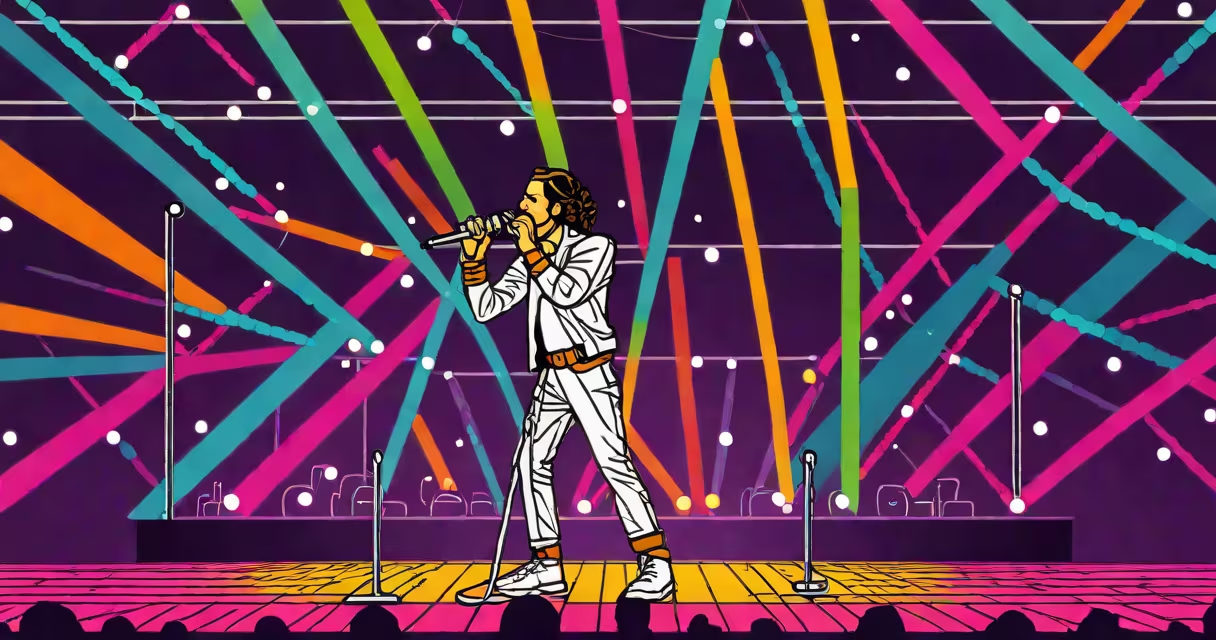
Rey del pop is Spanish for "king of pop," a title awarded to male pop musicians who achieve new commercial success and cultural influence. The term gained traction after the death of Michael Jackson, who was widely referred to as the "King of Pop" during his lifetime.
The title is not officially awarded but emerges organically through media coverage, fan culture, and industry recognition. It signifies an artist's dominance in pop music, often spanning decades and multiple albums.
While rey del pop specifically refers to male artists, the concept extends to other genres and genders. For example, Madonna is often called the "Queen of Pop," and other titles like "Prince of Pop" or "Princess of Pop" have been used for artists like Prince and Britney Spears.
The title is used globally, particularly in Spanish-speaking countries, to honor artists who have made significant contributions to pop music. It's a way to acknowledge their impact on the industry and their ability to captivate audiences worldwide.
For instance, in 2016, Luis Fonsi was referred to as the "rey del pop latino" after the global success of his song "Despacito." This shows how the title can evolve to fit different subgenres and regions within pop music.
One common misconception is that the title is exclusively for American or European artists. However, artists from various countries and cultures can earn this distinction. Another mistake is assuming the title is permanent; it can shift over time as new artists rise to prominence.
For example, in the 1960s, Elvis Presley was often called the "King of Rock and Roll," but this title has since been applied to other artists as well. Similarly, the rey del pop title can be fluid and context-dependent.
I once attended a concert where the performer was introduced as the "rey del pop," even though he had only recently gained popularity. This highlights how the title can sometimes be used prematurely or as a marketing tool.
Consider the case of Justin Bieber. He rose to fame as a teenager and quickly became one of the biggest pop stars in the world. His music dominated charts, and he was frequently referred to as the "Prince of Pop" before eventually being called the "King of Pop" by some media outlets. This evolution shows how the title can be earned over time through consistent success and cultural impact.
According to Billboard, Bieber has sold over 150 million records worldwide, demonstrating the kind of commercial success that can lead to such a prestigious title. His influence on pop culture and fashion further cemented his status as a pop royalty figure.