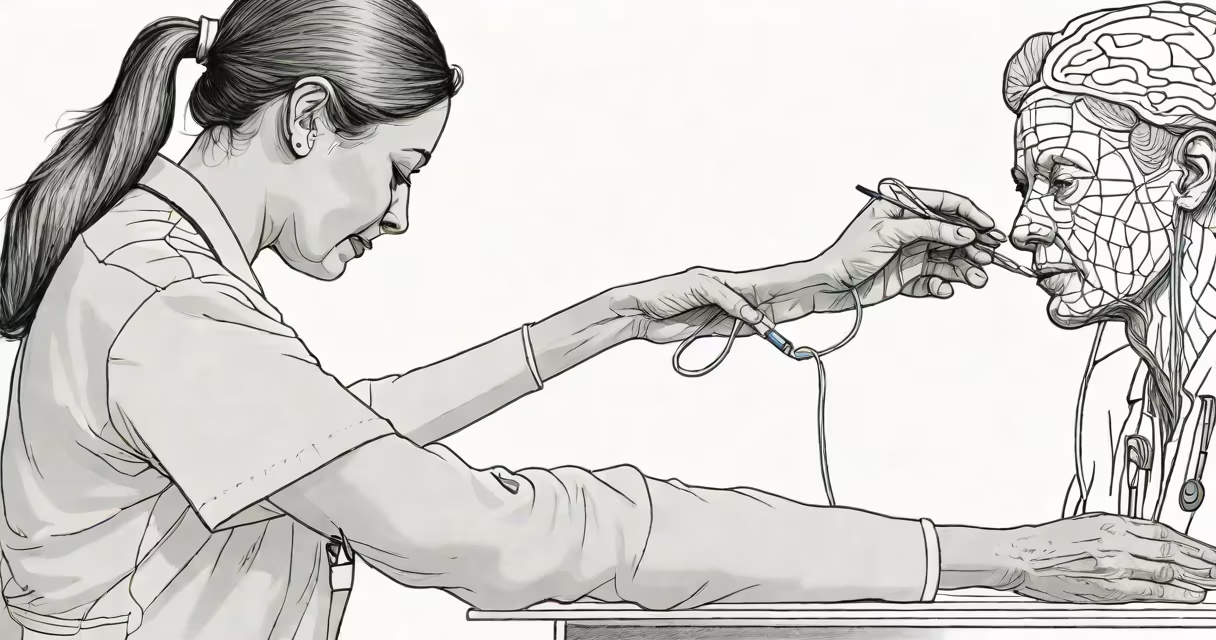
A registered nurse (RN) neurological system assessment is a standardized evaluation of a patient's brain and nervous system function, using specific tests to detect abnormalities.
The assessment follows a structured process:
RNs use several types of neurological assessments, including:
| Type | Description | Example |
|---|---|---|
| Mini-Mental State Examination (MMSE) | Brief screening tool for cognitive impairment | Asking the patient to name objects, repeat phrases, and follow commands |
| Glasgow Coma Scale (GCS) | Assesses conscious state in trauma or emergency patients | Scoring eye-opening, verbal response, and motor response |
| National Institutes of Health Stroke Scale (NIHSS) | Evaluates stroke severity and progression | Testing speech, language, and motor function |
RNs perform neurological assessments during initial patient encounters, follow-up visits, and when changes in neurological status occur. These evaluations help detect conditions like stroke, seizures, or traumatic brain injury early.
For example, if a patient reports sudden numbness or weakness, the RN performs targeted assessments to locate the affected area and determine the cause.
Many people confuse neurological assessments with psychological evaluations. While both assess brain function, neurological assessments focus on physical aspects like reflexes and sensory responses, whereas psychological evaluations examine mental health and behavior.
Another misconception is that only doctors can perform these assessments. In reality, RNs with proper training conduct them routinely in hospitals, clinics, and home care settings.
During my clinical rotations, I observed an RN performing a neurological assessment on a post-surgical patient. The nurse checked reflexes, tested sensory responses, and asked the patient to follow simple commands. This thorough evaluation helped identify a potential complication early, allowing for prompt intervention.