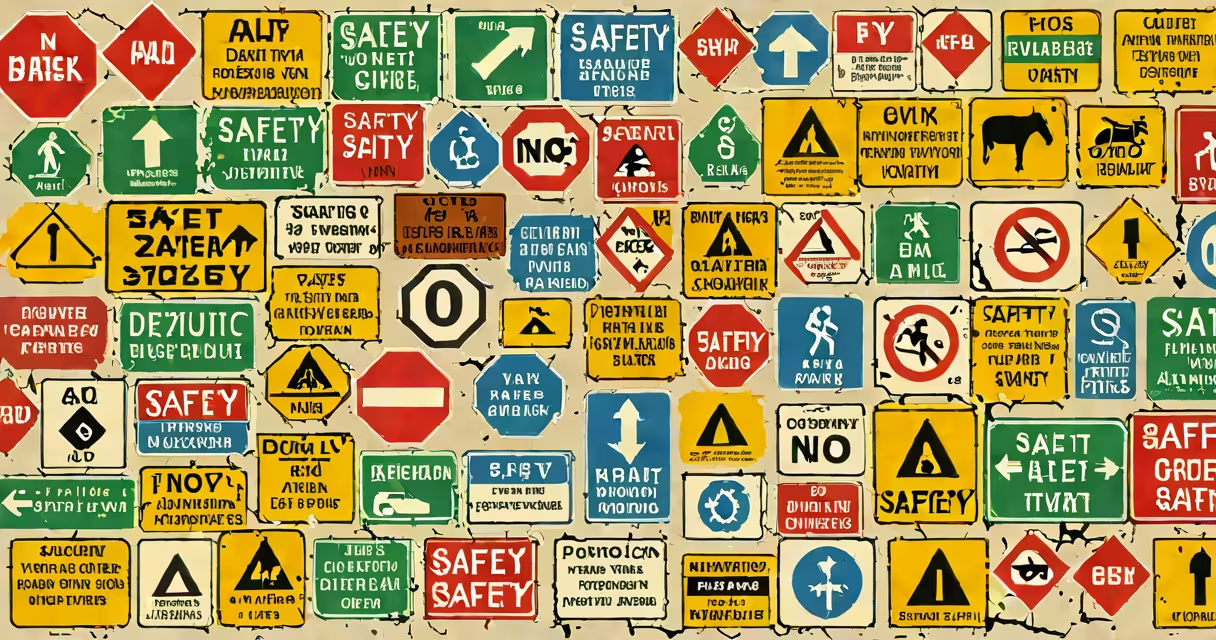
Safety signs use colors, symbols, and text to warn about hazards, provide instructions, and promote safe behavior in workplaces and public spaces. The Occupational Safety and Health Administration (OSHA) regulates these signs in the U.S., while other countries follow similar standards.
Safety signs rely on standardized elements to convey information quickly and:
| Type | Color | Example | Meaning |
|---|---|---|---|
| Danger | Red, black, and white | ⚡ | Imminent hazard with serious injury or death possible |
| Warning | Yellow and black | ⚠️ | Potential hazard with minor to moderate injury risk |
| Caution | Blue and white | 🛑 | Mandatory action required for safety |
| Safety Instruction | Green and white | 🚪 | Indicates safe areas or emergency exits |
Many people confuse safety signs with traffic signs or assume all red signs indicate danger. However, red signs also mark fire equipment like extinguishers and hoses., some signs use multiple colors-for instance, a red border around a yellow background signals a high-risk warning.
Another mistake is ignoring signs with familiar hazards. Even if a worker encounters a common hazard daily, such as wet floors, the sign reminds them to stay alert and follow safety protocols. According to OSHA, consistent exposure can lead to complacency, increasing accident risks.
Chemical labs use safety signs to warn about toxic substances, flammable materials, and required protective gear. A yellow sign with a black flame symbol and the text "Flammable - No Open Flames" alerts lab workers to avoid ignition sources near solvents. Nearby, a blue sign with white text instructs workers to "Wear Goggles" when handling corrosive chemicals.
I once visited a lab where a red sign with a white hard hat symbol and the words "Hard Hats Required Beyond This Point" stood at the entrance. The sign ensured visitors wore protective headgear before entering areas with overhead hazards. This layered approach-combining color, symbol, and text-made the message unmistakable.
Safety signs and what they mean play a critical role in preventing workplace accidents and ensuring compliance with regulations. By understanding their colors, symbols, and text, workers and the public can quickly grasp warnings and instructions, fostering safer environments.