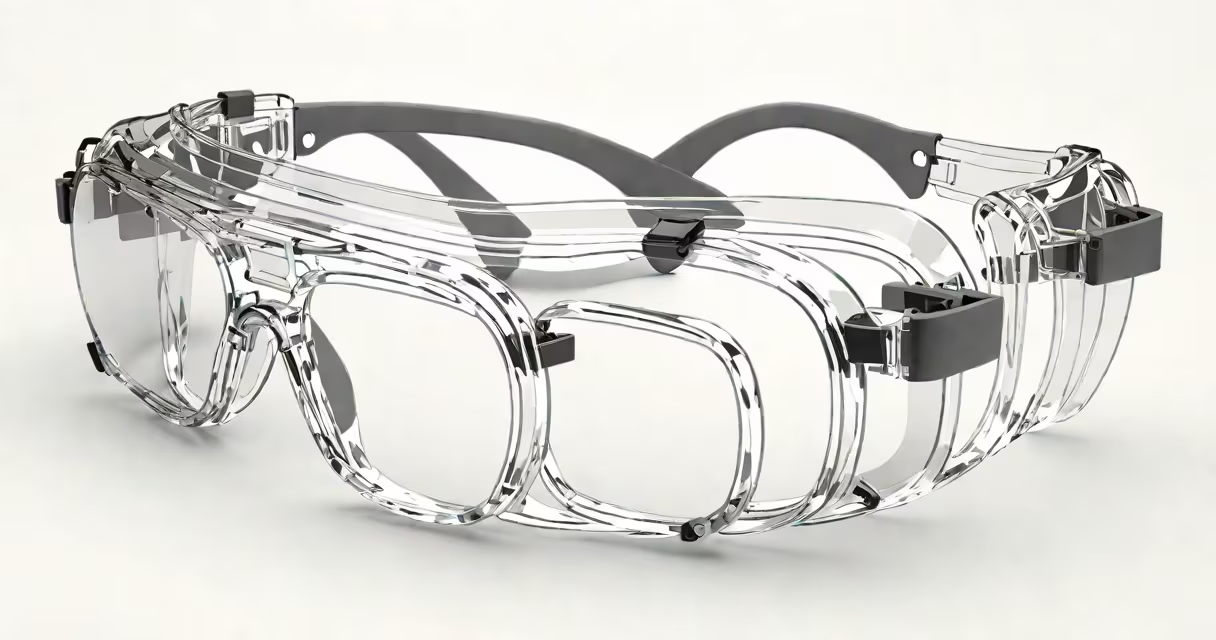
Safety glasses are specialized eyewear designed to protect the eyes from hazards. They shield against impact, debris, chemicals, and radiation through durable materials and precise manufacturing.
Safety glasses function through a combination of material strength and design features. Polycarbonate lenses resist shattering, while side shields block peripheral threats. Anti-fog coatings prevent vision impairment in humid environments. The frames distribute force during impacts, reducing injury risk.
| Type | Key Features | Common Uses |
|---|---|---|
| Basic Safety Glasses | Polycarbonate lenses, ANSI Z87.1 compliant | Construction, woodworking |
| Splash Goggles | Sealed fit, indirect ventilation | Chemical handling, lab work |
| Laser Safety Glasses | Tinted lenses, wavelength-specific filters | Laser operations, research labs |
Safety glasses are mandatory in construction sites, manufacturing plants, and laboratories. They prevent 600,000 eye injuries annually in the U.S., according to the American Academy of Ophthalmology. Even office workers benefit from blue light-blocking safety glasses during prolonged screen use.
Many assume regular prescription glasses provide adequate protection. However, they lack the impact resistance of ANSI Z87.1-rated safety glasses. Prescription safety glasses combine vision correction with protective standards. Another myth is that safety glasses are uncomfortable. Modern designs prioritize lightweight materials and adjustable fits.
I tested several brands while researching this article. The most comfortable pair had thin, flexible temples and a wrap-around design that stayed secure during movement. The lenses offered UV protection as an added benefit.