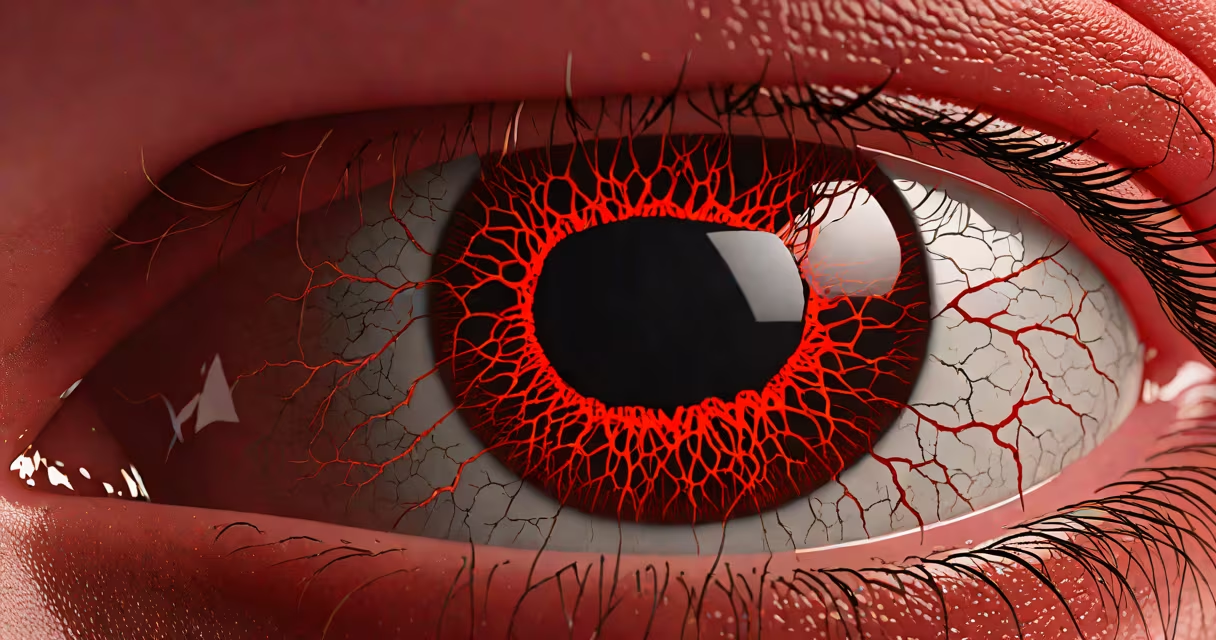
Seeing blood vessels in your vision typically means you're noticing dark, curved lines or web-like patterns, often called floaters. These usually appear when tiny fibers in the eye's vitreous gel shrink and clump. While common, sudden changes or flashes of light require immediate medical attention.
The vitreous humor, a gel-like substance filling the eye, contains collagen fibers. As we age, these fibers condense and cast shadows on the retina, appearing as floaters. When these floaters cluster near the retina's center, they may resemble blood vessels or cobweb-like shapes.
Floaters are the most frequent cause of seeing blood vessels in vision. Other causes include:
Most floaters are harmless, but seek immediate care if you experience:
These symptoms may indicate a retinal tear or detachment, which can lead to permanent vision loss if untreated.
Many people confuse floaters with other vision issues. Unlike floaters, which move with eye movement, retinal veins appear stationary. Floaters also don't affect vision clarity, while retinal issues often do.
Another misconception is that floaters always indicate serious problems. Most are benign, especially in older adults. However, sudden or numerous floaters warrant a visit to an eye doctor.
For most people, floaters are a normal part of aging. Understanding their causes and knowing when to seek help ensures long-term eye health.