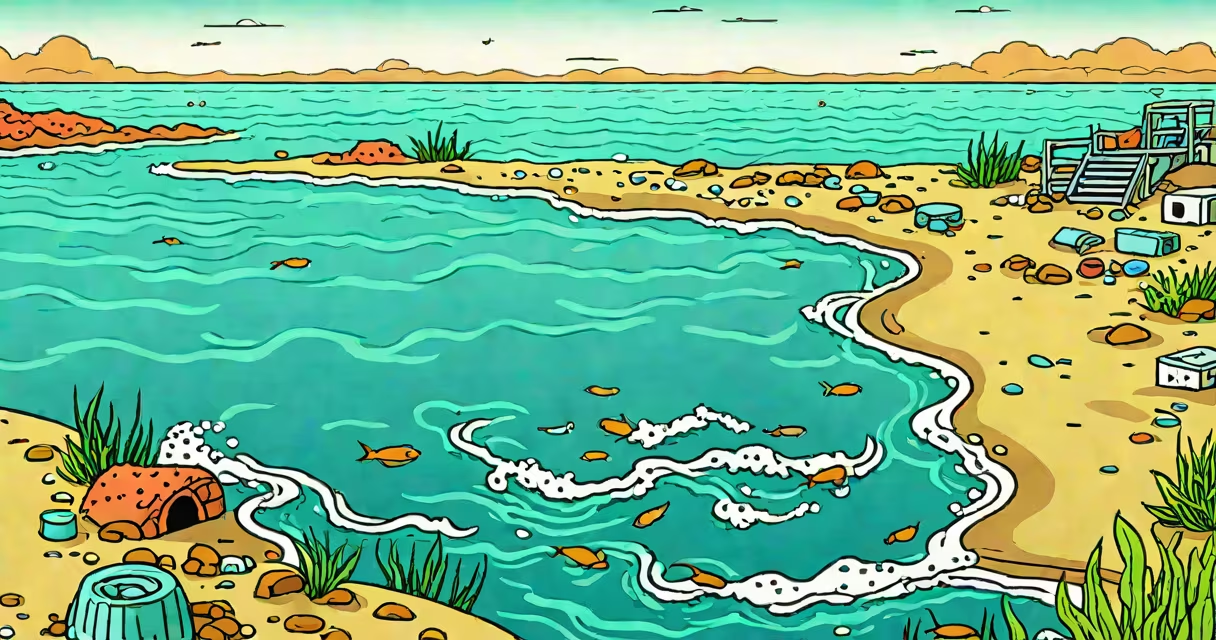
Sewage in the ocean occurs when untreated wastewater containing human waste, industrial chemicals, and household pollutants enters marine environments. This contamination harms aquatic life, threatens human health, and disrupts ecosystems.
Sewage reaches the ocean through several pathways:
| Source | Contribution |
|---|---|
| Municipal wastewater | Largest source, accounting for over 60% of sewage pollution in some regions |
| Industrial discharge | Contains heavy metals, toxic chemicals, and other hazardous substances |
| Agricultural runoff | Carries pesticides, fertilizers, and animal waste into waterways |
| Maritime activities | Ships discharge untreated sewage, with over 299 million gallons released annually worldwide |
Sewage pollution causes immediate and long-term damage to marine ecosystems:
Nutrient overload from sewage creates algal blooms that deplete oxygen in the water, leading to dead zones where marine life cannot survive. In 2017, over 400 dead zones were identified worldwide, covering an area larger than the United Kingdom.
Pathogens in sewage contaminate shellfish beds, making them unsafe for consumption. The U.S. Environmental Protection Agency estimates that sewage-related illnesses cause over 1.8 million cases of gastrointestinal illness annually in the U.S. alone.
Toxic chemicals in sewage accumulate in marine organisms, entering the food chain and posing risks to both wildlife and humans who consume seafood.
Reducing sewage in the ocean requires a combination of infrastructure improvements, regulatory enforcement, and public awareness:
Upgrading wastewater treatment facilities to handle higher capacities and improve filtration. For example, Singapore's NEWater system recycles treated sewage for industrial use, reducing ocean discharge by 15%.
Implementing stricter regulations on industrial discharges and enforcing penalties for violations. The European Union's Urban Waste Water Treatment Directive has reduced sewage pollution in member states since its implementation in 1991.
Promoting public education on proper waste disposal and the dangers of sewage pollution. Community involvement in beach cleanups and water quality monitoring can also help identify and address pollution sources.
Investing in alternative wastewater management systems, such as constructed wetlands or decentralized treatment systems, which can be more sustainable and effective in certain areas.
Many people assume that sewage in the ocean is only a problem in developing countries. However, even wealthy nations with advanced infrastructure face challenges. For instance, in 2021, over 860 billion gallons of untreated sewage were discharged into U.S. waters due to overflows and failing systems.
Another misconception is that sewage pollution only affects coastal areas. In reality, sewage can travel long distances through waterways and groundwater, impacting marine environments far from the original source.
Understanding the sources and impacts of sewage in the ocean is the first step toward protecting marine ecosystems and ensuring clean water for future generations. By implementing effective solutions and promoting responsible waste management practices, we can reduce this form of pollution and its harmful effects on the environment.