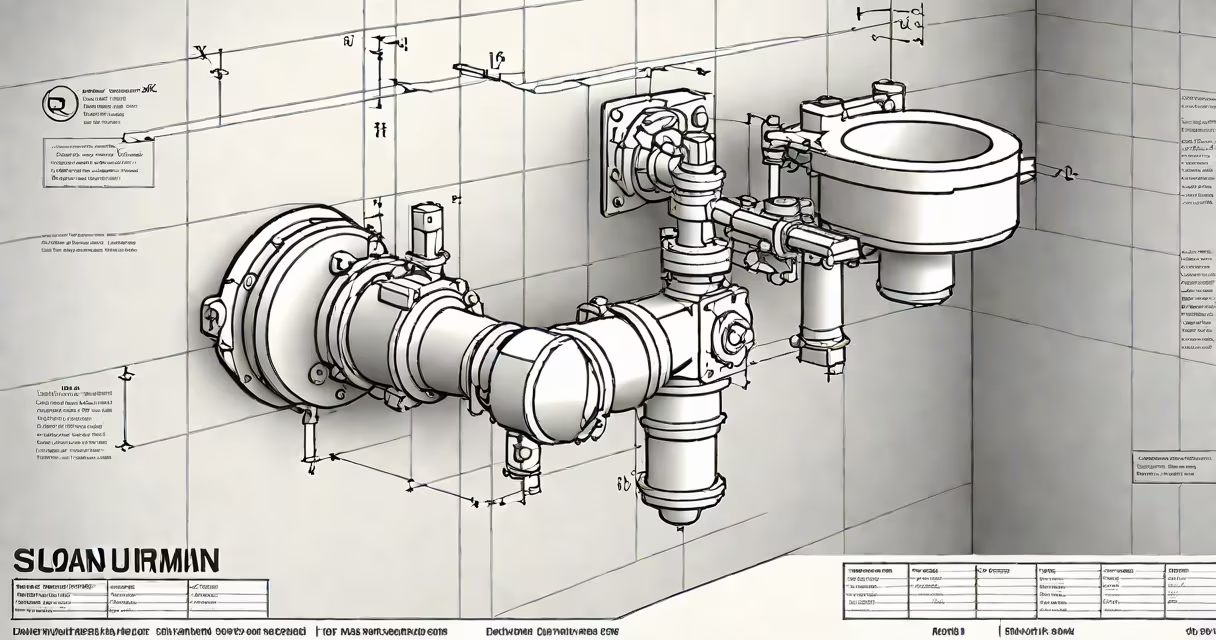
A Sloan urinal flush valve is a mechanical device that controls water flow in commercial restroom urinals, typically releasing 0.5 to 1 gallon per flush. These valves are designed for efficiency, durability, and water conservation.
The valve operates using a combination of gravity and pressure. When the handle is pushed, it lifts a diaphragm inside the valve, allowing water to flow into the urinal. Once released, the diaphragm returns to its sealed position, stopping the flow. Modern versions often include sensors for hands-free operation.
| Type | Activation Method | Water Usage (gallons) |
|---|---|---|
| Manual | Handle push | 1.0 |
| Sensor | Infrared sensor | 0.5 |
| Dual-Flush | Two handles (full/partial flush) | 0.5/1.0 |
These valves are standard in public restrooms, office buildings, schools, and other high-traffic facilities. They're preferred for their reliability and compliance with water conservation regulations. The U.S. Environmental Protection Agency (EPA) reports that commercial restrooms equipped with these valves can reduce water usage by up to 50%.
Many assume these valves require constant water pressure to function. However, most models operate effectively within a wide pressure range (20-125 psi). Another myth is that sensor valves are prone to false activations due to movement. Modern infrared sensors are highly accurate, activating only when a user is directly in front of the urinal.
I once installed a sensor-equipped Sloan valve in a high-traffic office building. Within weeks, water usage dropped by 30%, and maintenance requests plummeted due to the valve's self-cleaning design.