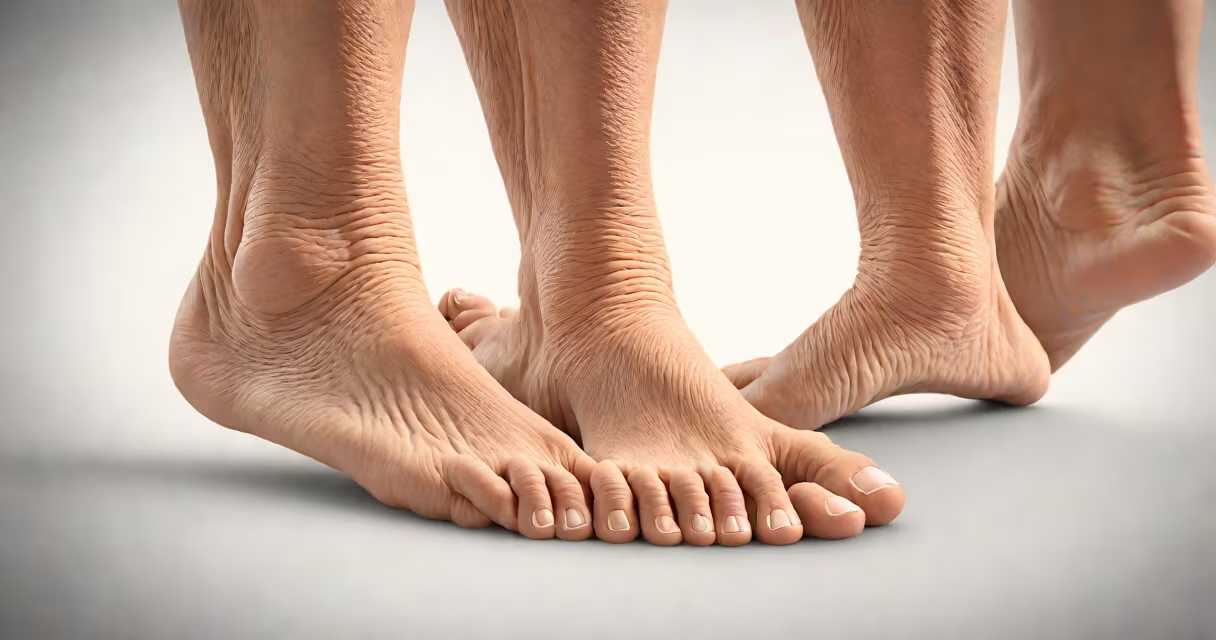
Swelling of feet and ankles in elderly people, called peripheral edema, happens when fluid builds up in tissues due to gravity pulling blood downward. This common condition affects about 1 in 5 seniors and often signals underlying health issues.
When your heart pumps blood, it circulates through arteries to your extremities. Veins carry blood back to your heart. Valves in veins prevent backflow. As we age, these valves weaken, causing fluid leakage into surrounding tissues. This results in swelling, especially in lower extremities.
Peripheral edema in seniors typically stems from:
Besides visible swelling, watch for:
Schedule an appointment if swelling:
Seek emergency care if swelling occurs after an injury or is accompanied by fever, redness, or warmth (possible infection).
Doctors treat the underlying cause. Common approaches include:
Seniors can reduce swelling risk by:
I noticed my grandmother's foot swelling improved when she started wearing compression socks during long car rides. Her doctor recommended 20-30 mmHg gradient stockings, which helped reduce discomfort and visible swelling within weeks.
Many people assume foot swelling is just a normal part of aging. While common in seniors, it's not normal and often indicates an underlying condition requiring medical attention. Another myth is that drinking more water causes swelling - actually, proper hydration helps maintain healthy circulation.
Outlook depends on the underlying cause. Proper treatment often reduces swelling. Chronic conditions like heart failure may require ongoing management. Early diagnosis and treatment improve outcomes and quality of life.