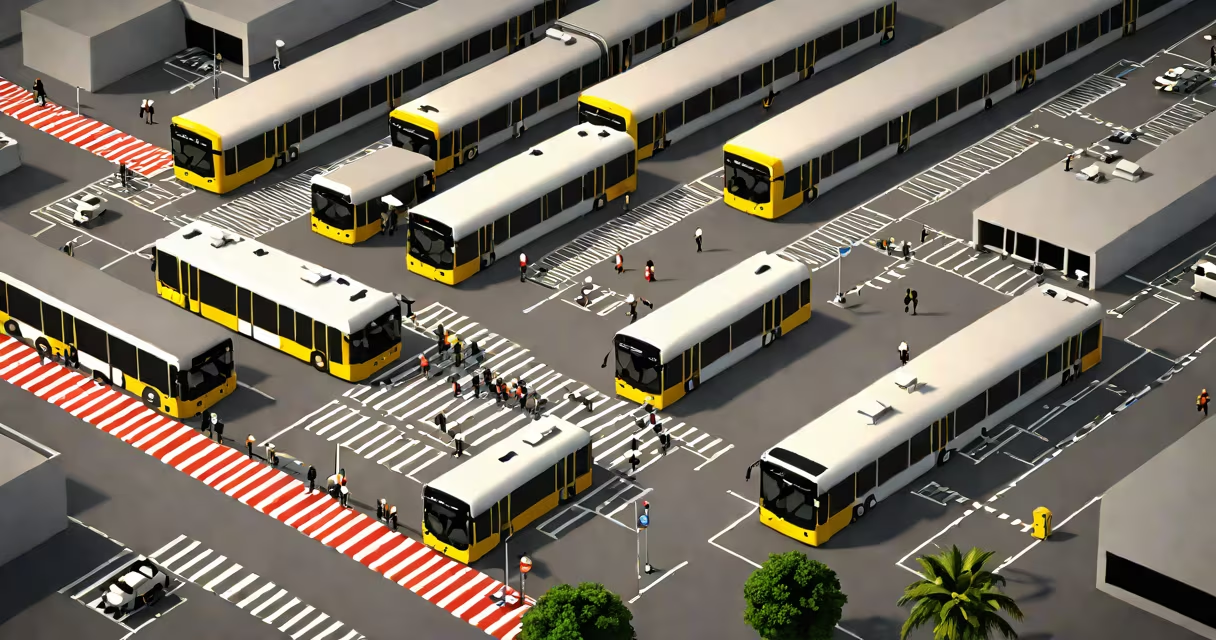
A terminal de omnibus is a centralized bus station designed to manage high volumes of passengers and vehicles efficiently. These facilities serve as critical hubs in public transportation networks, connecting urban centers with suburbs and rural areas.
Most terminals operate using a zoning system that separates arrival and departure areas. Buses enter through one lane, unload passengers, then move to designated holding areas while awaiting their scheduled departure time. This prevents congestion and ensures smooth traffic flow.
For example, São Paulo's Terminal Rodoviário Jabaquara handles over 200,000 passengers daily using this model. Its 68 platforms accommodate 1,200 bus movements per day.
| Type | Capacity | Primary Function |
|---|---|---|
| Urban Terminal | 500-5,000 passengers/hour | Intra-city transit |
| Intercity Terminal | 1,000-20,000 passengers/hour | Regional connections |
| Multimodal Hub | 5,000+ passengers/hour | Bus, rail, metro integration |
Contemporary designs prioritize accessibility, security, and passenger comfort. Features include:
Mexico City's Terminal de Autobuses de Pasaje de Lujo (TAP) includes a medical clinic and lost-and-found office within its 44-acre footprint.
Many assume all bus terminals are simply parking lots with shelters. In reality, well-designed terminals incorporate:
When I consulted on a terminal redesign project, the biggest challenge was balancing pedestrian flow with vehicle movements. The solution required:
According to the International Association of Public Transport, well-designed terminals can increase ridership by 15-25% through improved passenger experience.