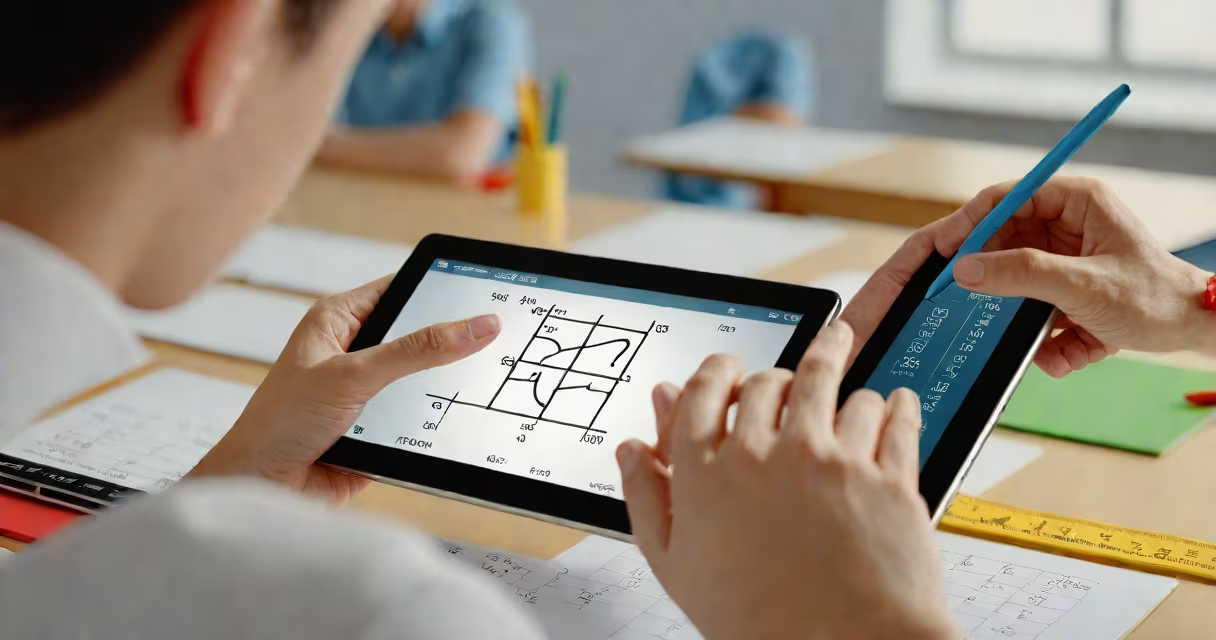
Technology for math classrooms refers to digital tools and platforms designed to improve teaching and learning in mathematics. These tools range from interactive software to virtual manipulatives, helping students grasp complex concepts through engagement and visualization.
| Type | Examples | Primary Use |
|---|---|---|
| Interactive Software | Desmos, GeoGebra | Graphing functions, exploring geometry |
| Virtual Manipulatives | Math Playground, Toy Theater | Visualizing abstract concepts |
| Adaptive Learning Platforms | Khan Academy, IXL | Personalized practice problems |
Many assume technology replaces teachers, but it complements their role. For instance, a teacher might use math what is x to explain variables through interactive simulations, reinforcing their lessons rather than replacing them. Another misconception is that tech tools are only for advanced learners. In reality, they benefit all students, including those who need extra support.
In my observation of a fifth-grade class, students used tablets to solve fraction problems via an app called Fraction Mover. The app allowed them to drag and drop visual representations of fractions, making abstract concepts tangible. By the end of the unit, 85% of students demonstrated mastery, compared to 60% the previous year using traditional methods.
Technology bridges gaps between abstract theories and practical applications. For example, a tool like Desmos lets students explore the relationship between equations and graphs instantly. According to the Virginia Department of Education, schools integrating technology see higher engagement and better retention of math concepts. By making learning interactive and visual, technology prepares students for real-world problem-solving.