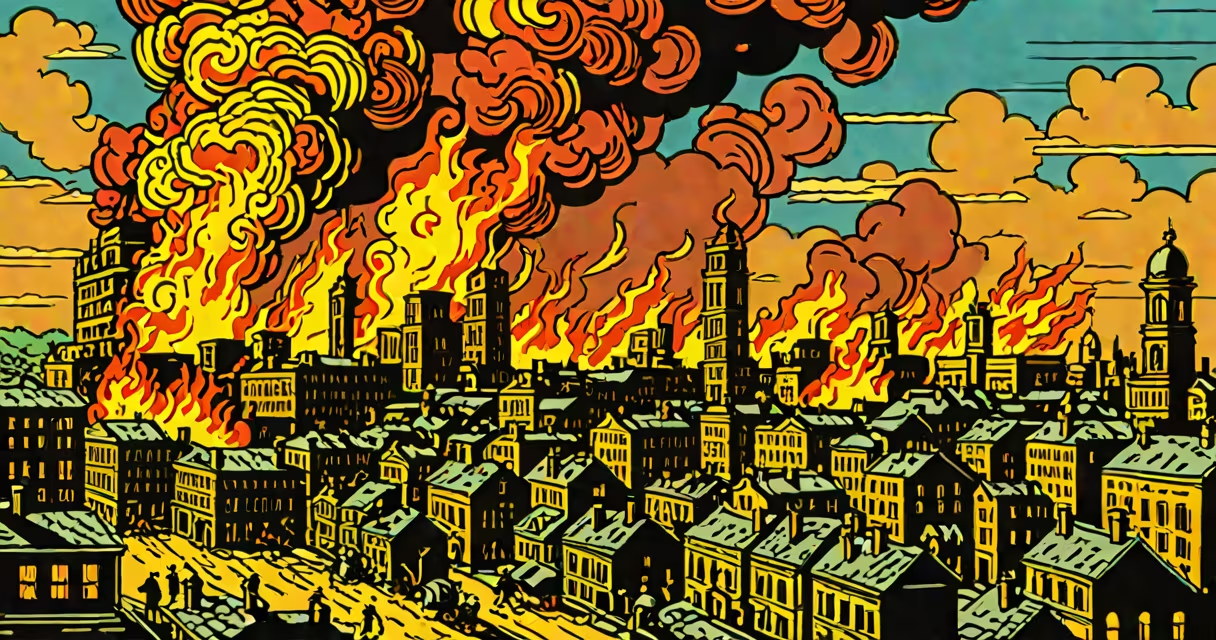
The Great Chicago Fire of 1871 was a catastrophic blaze that destroyed much of Chicago between October 8 and October 10, leaving nearly 100,000 homeless and killing about 300 people. The fire burned for 27 hours, consumed 17,450 buildings, and left $200 million in damages ($4 billion today).
The fire began in the barn behind the O'Leary family's home on DeKoven Street. The most popular story claims Mrs. O'Leary's cow kicked over a lantern while she was milking it, though historians now consider this likely a myth. The exact cause remains unknown.
The fire spread quickly due to strong winds, dry conditions, and buildings made of wood. It destroyed:
Chicago in 1871 was a rapidly growing city with little regulation on building materials or fire safety. Most structures were made of wood, and the city lacked a professional fire department. The strong winds that night fanned the flames, turning small fires into an unstoppable inferno.
Rebuilding began almost immediately. Chicago adopted stricter building codes, requiring stone and brick construction in the central business district. The fire also led to advances in firefighting equipment and techniques. By 1890, Chicago's population had doubled, and it became one of the fastest-growing cities in the world.
One surprising fact: The fire indirectly led to the creation of the Board of Trade's trading floor, as merchants needed a central location to conduct business after their offices were destroyed. This became the foundation of modern commodity trading.
I visited the Chicago History Museum years ago and saw artifacts from the fire, including charred debris and personal belongings recovered from the ashes. The scale of destruction was staggering, even in retrospect.
Many believe the fire destroyed the entire city, but it actually burned less than one-third of Chicago's area. Others think it was caused by an arsonist, but no evidence supports this claim. The cow-kicking-lantern story persists despite being debunked.
The Great Chicago Fire reshaped urban planning and fire safety nationwide. It demonstrated the need for better building materials, organized fire departments, and emergency response systems. The disaster also spurred Chicago's rebuilding as a modern metropolis.