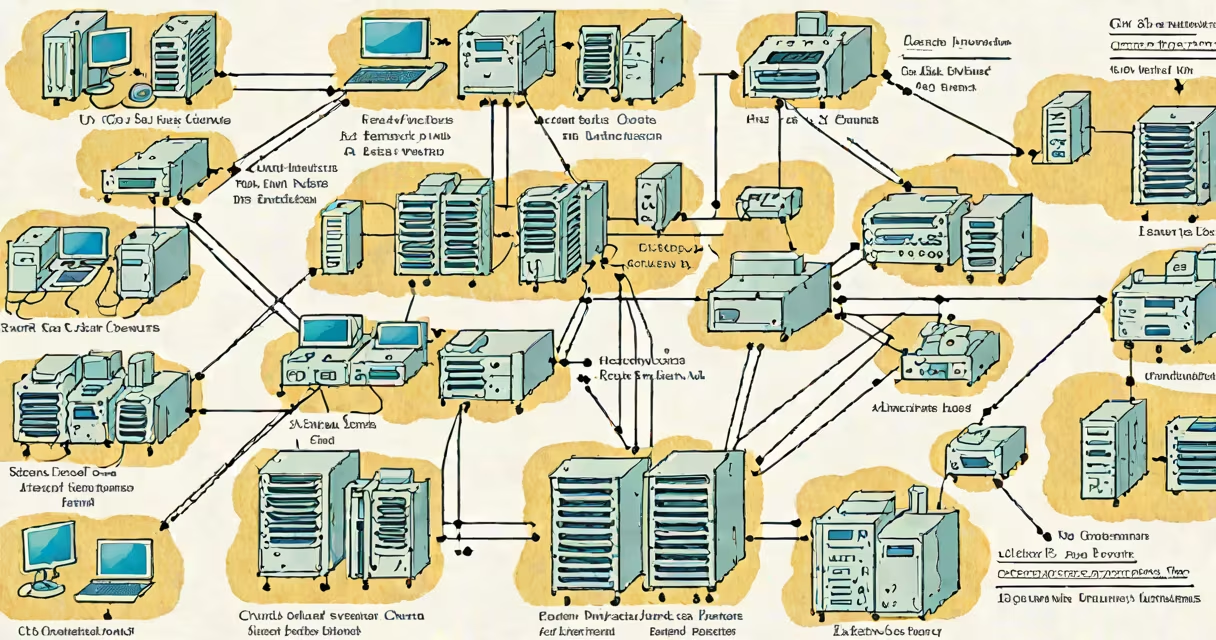
A network operating system (NOS) is specialized software designed to manage devices within a computer network, providing shared access to files, printers, and other resources while enforcing security protocols. Unlike general-purpose operating systems, NOS focuses on multi-user environments and distributed computing.
Network operating systems run on servers and coordinate communication between clients (user devices) and central resources. They handle authentication, data routing, and resource allocation through protocols like TCP/IP or NetBIOS. For example, Microsoft Windows Server uses Active Directory for centralized user management across a network.
| Type | Examples | Primary Use Case |
|---|---|---|
| Peer-to-Peer | Linux, AppleShare | Small networks where each device shares resources equally |
| Client-Server | Windows Server, Novell NetWare | Large organizations needing centralized control |
Many confuse NOS with general operating systems like Windows 10 or macOS. However, NOS lacks graphical interfaces for individual users, focusing instead on managing network traffic and permissions. For instance, while Windows 10 runs on personal computers, Windows Server handles network operations for businesses.
When I set up a small office network using Ubuntu Server, I configured the NOS to share a single printer among five workstations. The server handled print job queues, user permissions, and network security, demonstrating how NOS simplifies resource management in multi-device environments.