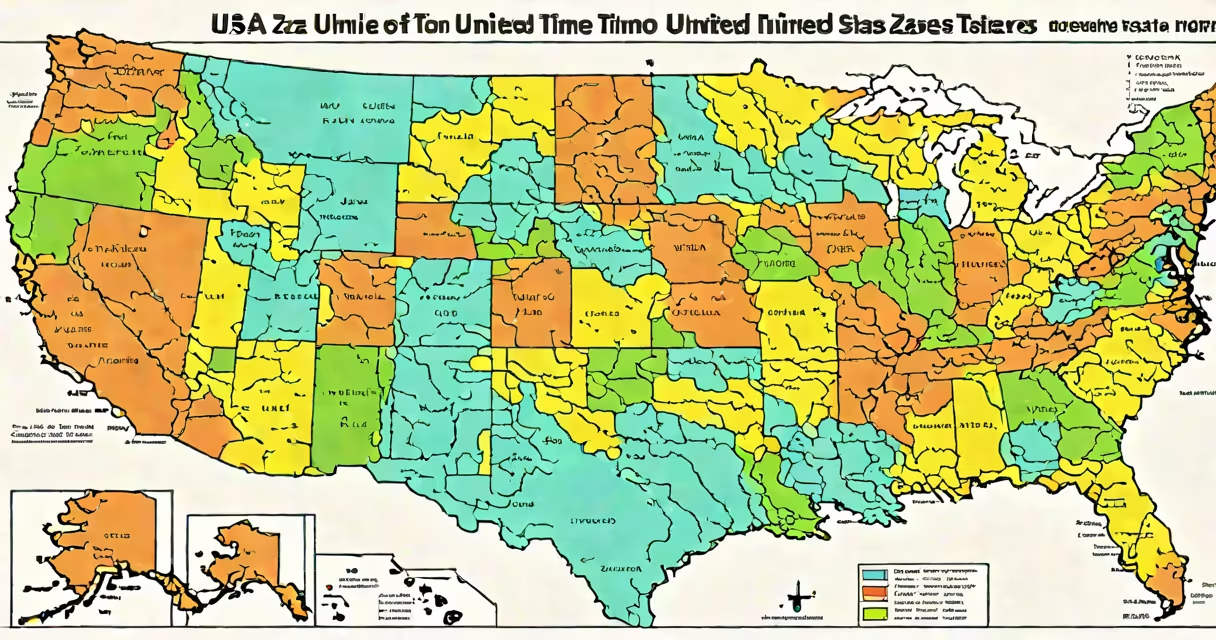
A time zone clock USA displays the current local time across the United States, which spans six time zones. These clocks account for daylight saving time changes and help synchronize schedules nationwide.
Time zone clocks show simultaneous times in different U.S. regions by adjusting for UTC offsets. For example, New York (Eastern Time) is UTC-5 during standard time, while Los Angeles (Pacific Time) is UTC-8. When daylight saving time starts, Eastern Time becomes UTC-4, creating a 3-hour difference between the two coasts.
The U.S. has six time zones:
| Time Zone | Abbreviation | Standard Time UTC Offset | Daylight Saving Time UTC Offset |
|---|---|---|---|
| Eastern Time | ET | UTC-5 | UTC-4 |
| Central Time | CT | UTC-6 | UTC-5 |
| Mountain Time | MT | UTC-7 | UTC-6 |
| Pacific Time | PT | UTC-8 | UTC-7 |
| Alaska Time | AKT | UTC-9 | UTC-8 |
| Hawaii-Aleutian Time | HAT | UTC-10 | No daylight saving time |
These clocks prevent scheduling conflicts. For instance, a 10 AM meeting in New York occurs at 7 AM in Los Angeles. Airlines, businesses, and remote workers rely on accurate time zone displays to coordinate activities. The U.S. adopted time zones in 1883, aligning with global standards.
When I traveled from New York to San Francisco, my time zone clock showed a 3-hour difference. During daylight saving time, both cities advanced their clocks forward, maintaining the same offset. This synchronization helped me adjust my schedule for flights and meetings.
Some U.S. territories use different time zones. Puerto Rico follows Atlantic Standard Time (UTC-4), while Guam uses Chamorro Standard Time (UTC+10). These exceptions require additional adjustments for international coordination.