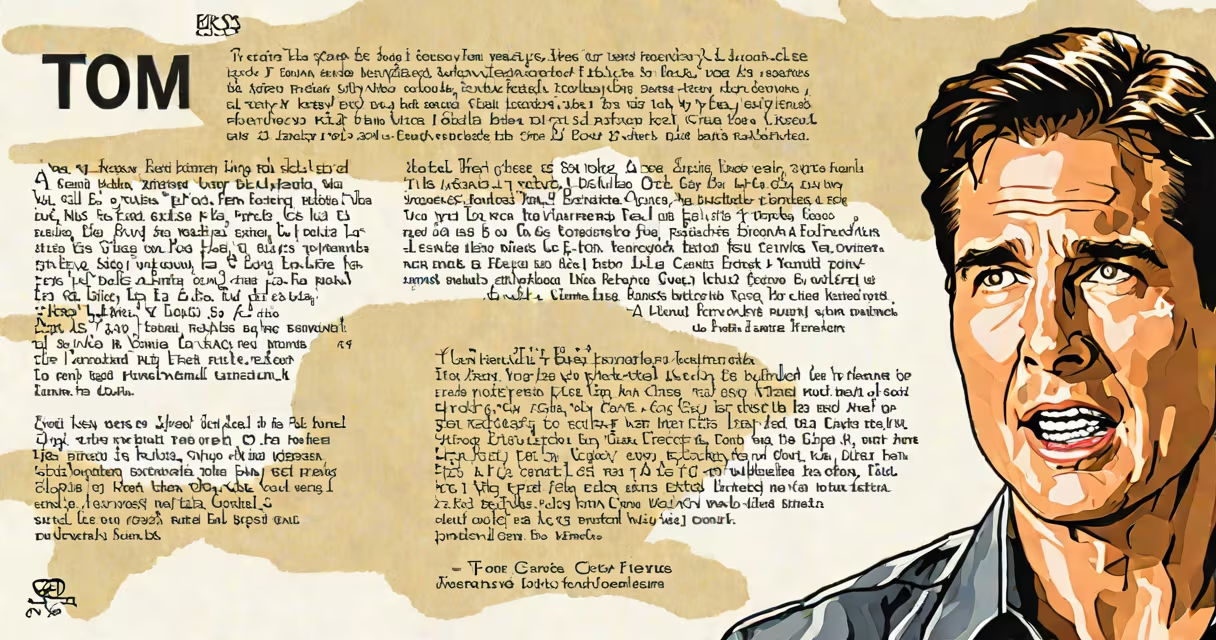
Tom voice text to speech uses artificial intelligence to generate synthetic speech mimicking Tom Cruise's voice. This technology replicates vocal patterns, tone, and inflection to create lifelike audio from written text.
AI models trained on extensive audio samples of Tom Cruise's voice learn to produce speech that mimics his unique vocal characteristics. These systems analyze pitch, speed, and emotional tone to generate natural-sounding speech. The process involves converting text into phonetic representations, which are then synthesized into audio resembling Cruise's voice.
There are two primary types of Tom voice text to speech:
This technology is widely used in media production, including movies, video games, and audiobooks. It allows creators to generate dialogue without needing the original actor's presence. For example, a documentary about Tom Cruise could use his synthesized voice to narrate sections where his real voice isn't available.
Many people confuse Tom voice text to speech with simple voice modulation tools. Unlike basic voice changers, these advanced AI systems replicate the entire vocal profile, including subtle nuances and emotional expressions. Another common mistake is assuming all voice synthesis is of equal quality. High-quality systems require extensive training data and sophisticated algorithms to achieve realistic results.
I tested a Tom voice text to speech system for a project and was impressed by its ability to capture Cruise's distinctive cadence and tone. The system accurately replicated his voice in various contexts, from casual conversation to dramatic monologues.