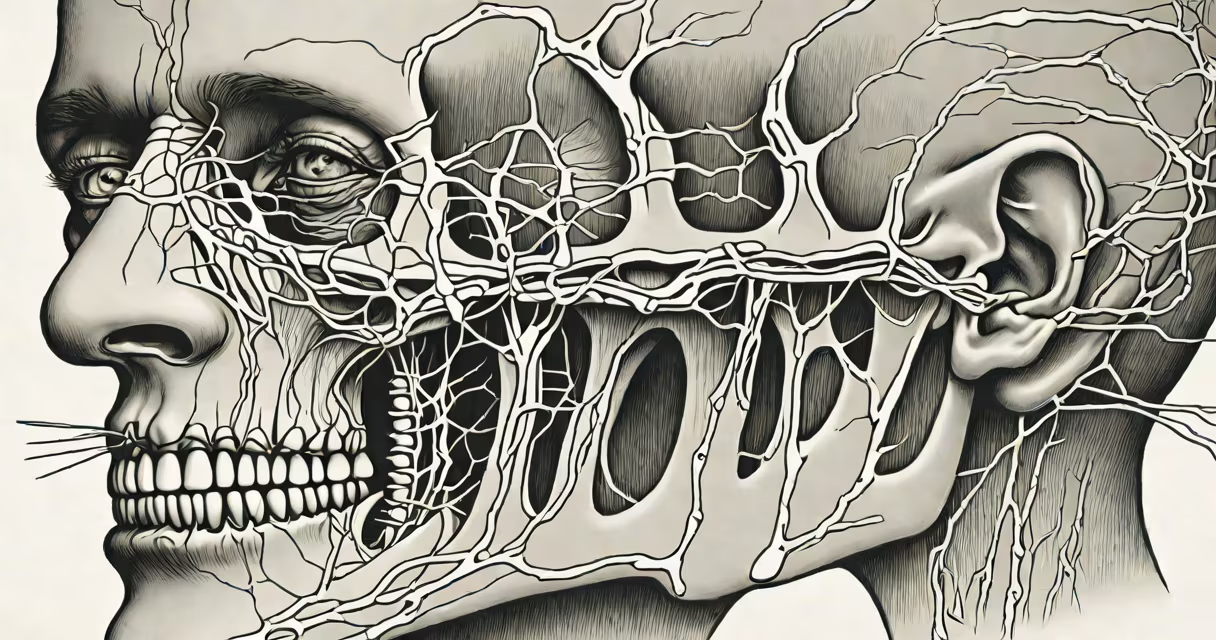
Toothache makes your eye hurt because nerves from your teeth share pathways with those in your face and eyes. This referred pain occurs when inflammation or infection irritates the trigeminal nerve, which branches to both areas.
The trigeminal nerve, the largest cranial nerve, has three main branches: ophthalmic (eye), maxillary (upper teeth), and mandibular (lower teeth). When dental pain triggers this nerve, signals can travel along multiple branches, creating pain in unexpected locations.
For example, a cavity in an upper molar may cause eye pain because the maxillary branch connects to both the tooth and the eye area. The brain interprets these mixed signals as coming from the eye, even though the source is dental.
Several dental issues can lead to eye pain:
See a dentist or doctor if:
Untreated dental infections can spread to the eye socket or brain, risking serious complications like meningitis or vision loss.
Last winter, I developed sudden eye pain with no clear cause. An oral exam revealed an abscess in an upper molar. After a root canal, the eye pain disappeared within days-confirming the connection between my tooth and eye.
Maintain good oral hygiene: brush twice daily, floss, and visit a dentist every six months. Avoid chewing hard objects that could crack teeth. If you grind your teeth at night, ask your dentist about a mouthguard.
If you experience frequent sinus infections, consider allergy treatments or decongestants to reduce pressure on upper teeth.