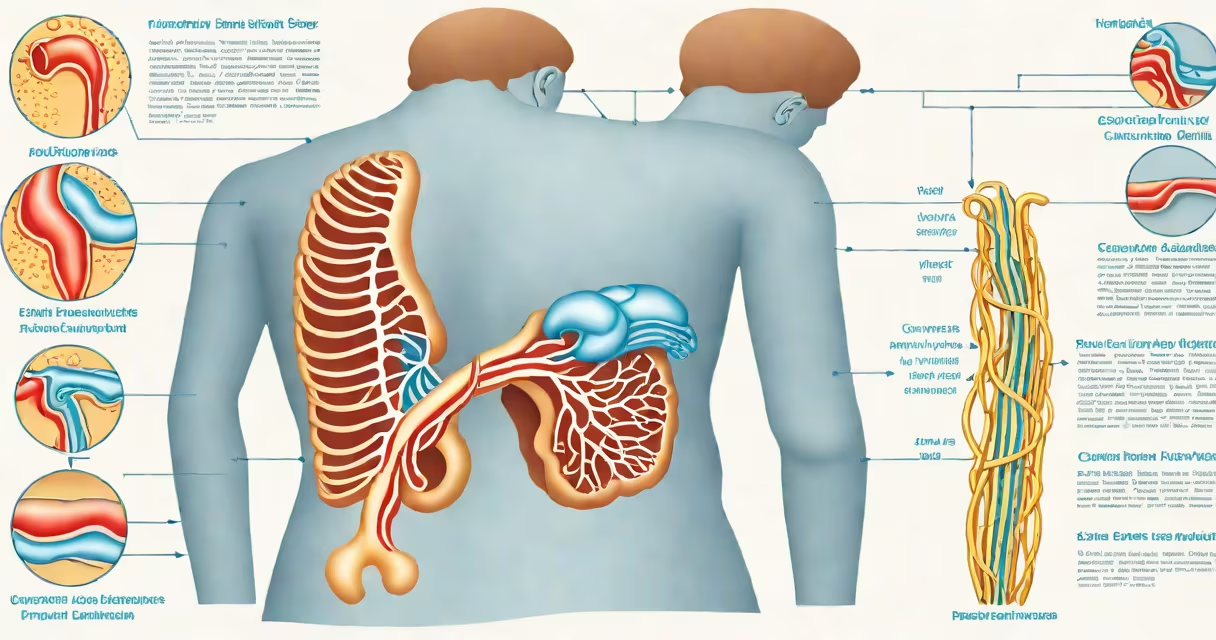
Trapped gas pain in upper back occurs when gas builds up in the stomach or intestines and presses against nerves near the spine. This can cause sharp, stabbing pain that often worsens with movement.
Gas typically forms in the stomach and small intestine during digestion. When gas can't escape through belching or passing it, it gets trapped in pockets. These pockets press on nearby nerves, including those connected to the upper back. The pain may feel sudden and severe, even though the underlying issue is harmless.
| Type | Location | Common Triggers |
|---|---|---|
| Stomach gas | Upper abdomen, sometimes radiating to the upper back | Carbonated drinks, chewing gum, eating too fast |
| Intestinal gas | Lower abdomen, but can refer pain to the upper back | Beans, cruciferous vegetables, dairy (if lactose intolerant) |
| Swallowed air | Upper abdomen and back | Talking while eating, drinking through straws |
Many people mistake trapped gas pain for heart problems or muscle strain because the pain can feel intense and localized. Unlike heart-related pain, gas pain usually changes with posture or movement. A 2018 study in Clinical Gastroenterology and Hepatology found that 30% of patients with unexplained upper back pain had undiagnosed digestive issues.
If the pain persists or worsens, it's important to rule out other causes. For example, gallbladder issues or acid reflux can also cause upper back pain. A doctor may recommend imaging tests or a physical exam to confirm the diagnosis.
The best way to relieve trapped gas pain is to help the gas pass naturally. Over-the-counter remedies like simethicone (e.g., Gas-X) can help break up gas bubbles. Walking or gentle stretching may also encourage gas to move through the digestive tract.
For prevention, avoid common triggers like carbonated drinks, chewing gum, and eating too quickly. Probiotics may also help balance gut bacteria and reduce gas buildup.
Most trapped gas pain is harmless, but see a doctor if:
In rare cases, trapped gas pain could indicate a more serious condition, such as a bowel obstruction or pancreatitis. A healthcare provider can determine the cause and recommend treatment.