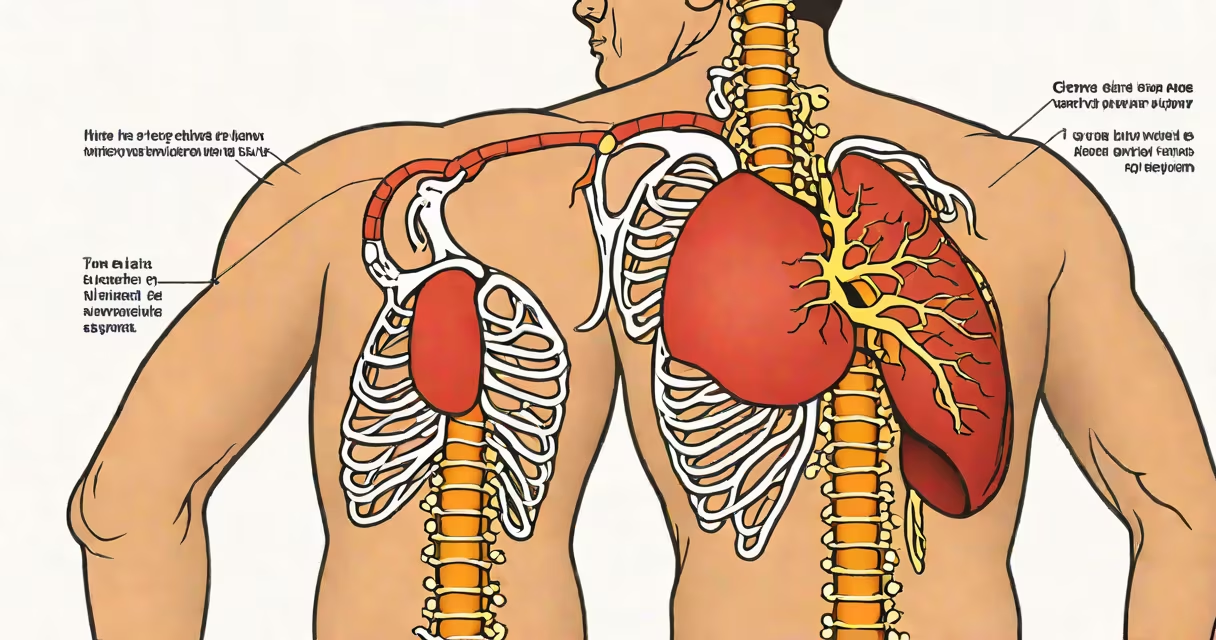
Trapped gas in upper back refers to discomfort caused by gas buildup in the digestive tract, which radiates to the upper back muscles. This pain is often mistaken for muscle strain but originates from gastrointestinal issues.
Gas naturally forms in the digestive system during digestion. When gas cannot escape through belching or passing, it may press against organs and nerves, causing referred pain in the upper back. The vagus nerve, which connects the brain to the digestive tract, can transmit this pain to the back.
The primary causes of trapped gas in the upper back include:
Symptoms of trapped gas in the upper back often mimic muscle pain, leading to misdiagnosis. Common signs include:
Many people visit a chiropractor or massage therapist for what they believe is muscle tension, only to find relief after addressing digestive issues. A study published in the Journal of Clinical Gastroenterology found that 30% of patients with unexplained upper back pain had underlying digestive issues.
To alleviate trapped gas in the upper back, try these methods:
| Method | How It Helps |
|---|---|
| Over-the-Counter Medications | Antacids or simethicone can help break up gas bubbles. |
| Dietary Changes | Avoiding known trigger foods and eating smaller meals can reduce gas buildup. |
| Exercise | Walking or gentle stretching can help move gas through the digestive system. |
In my experience, drinking peppermint tea after meals reduces upper back discomfort linked to gas. Peppermint oil relaxes digestive muscles, allowing gas to pass more easily.
If upper back pain persists despite home remedies, consult a healthcare provider. Chronic gas pain may indicate an underlying condition like GERD or a hiatal hernia. A doctor can perform tests, such as an upper endoscopy or X-ray, to diagnose the issue accurately.