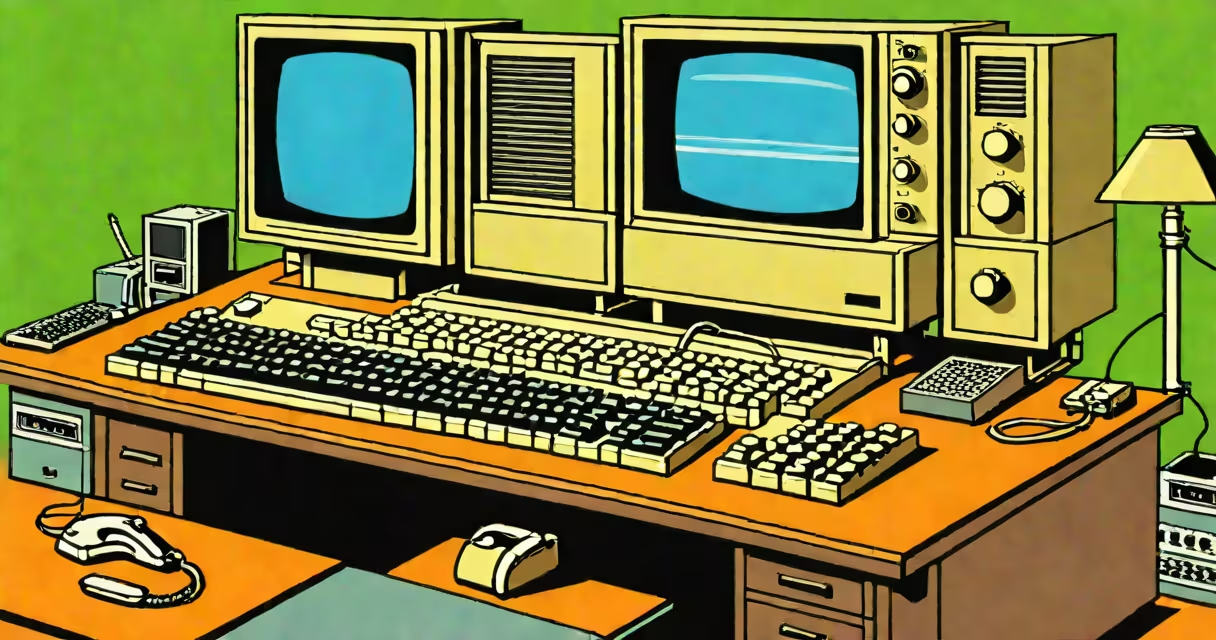
The TRS-80 Model 3 was a 1980 upgrade to the original TRS-80 microcomputer, offering improved performance and features while maintaining compatibility with earlier models. Released by Tandy Corporation in 1980, it was part of the popular TRS-80 series that helped democratize computing in the late 1970s and early 1980s.
The Model 3 addressed several limitations of its predecessors. It doubled the RAM to 48KB (expandable to 64KB), included a faster Z80 CPU running at 2.0MHz, and added a full-stroke keyboard. The machine also introduced better video capabilities with a 12-inch monitor supporting 80 columns of text, compared to the original's 64 columns.
| Component | Specification |
|---|---|
| CPU | Zilog Z80A (2.0 MHz) |
| RAM | 48KB standard (expandable to 64KB) |
| Video Display | 12-inch monitor, 80x24 text mode |
| Storage | Cassette tape (standard), optional floppy disk drive |
| Operating System | TRSDOS |
The TRS-80 Model 3 ran most software written for earlier TRS-80 models due to its backward compatibility. Popular applications included Microsoft BASIC, VisiCalc (one of the first spreadsheet programs), and various games. The machine's expanded memory allowed for more complex programs and better multitasking capabilities.
The TRS-80 Model 3 played a significant role in making personal computers accessible to the general public. Its affordability and improved specifications attracted hobbyists, educators, and small businesses. The machine's success contributed to the growth of the personal computer market in the early 1980s, paving the way for future developments in computing technology.
Many people confuse the TRS-80 Model 3 with the original TRS-80 Model 1, assuming they have similar specifications. While they share some similarities, the Model 3 offers substantial improvements in processing power, memory, and display capabilities. Another misconception is that the TRS-80 series was only for hobbyists; in reality, it found widespread use in education and business environments.
I remember using a TRS-80 Model 3 in a high school computer class in the early 1980s. The machine's simplicity and reliability made it an excellent tool for learning basic programming concepts. Its compatibility with various software applications allowed students to explore different aspects of computing, from word processing to simple game development.