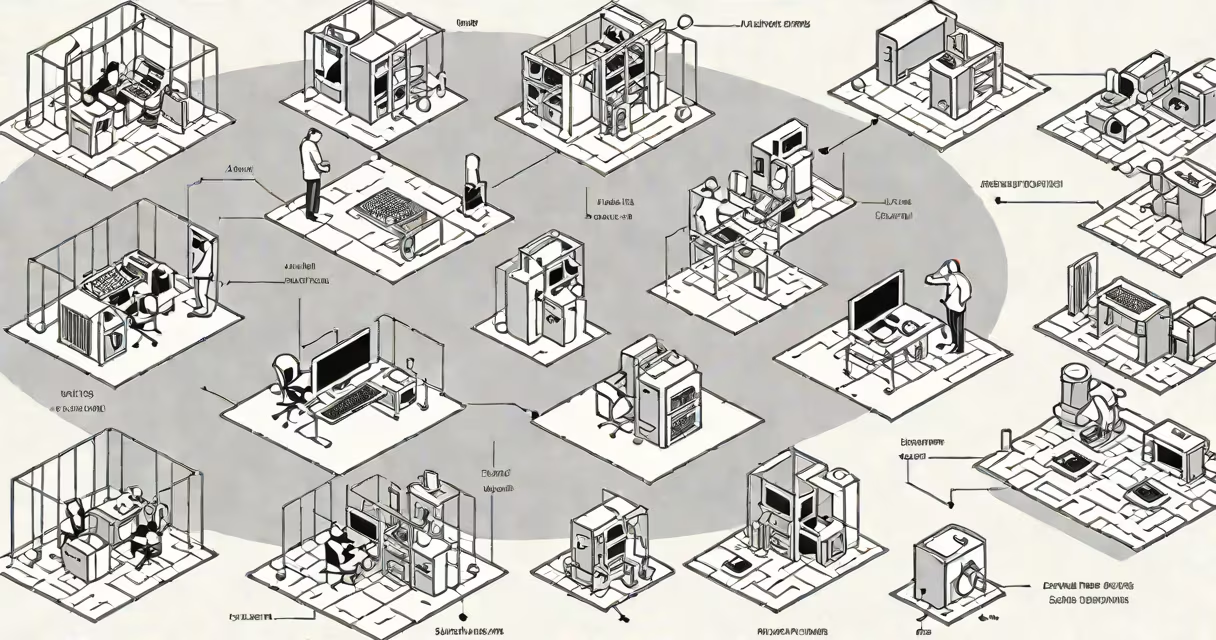
AI agents are software programs that perform tasks autonomously or semi-autonomously using artificial intelligence. They operate through perception, reasoning, learning, and acting, often interacting with environments to achieve goals.
AI agents process input data, make decisions based on predefined rules or machine learning models, and execute actions. Sensors gather data from the environment, while actuators carry out physical actions. For example, a chatbot processes user text input, determines the appropriate response using natural language processing, and generates a reply.
AI agents fall into three primary categories based on their autonomy and interaction capabilities:
| Type | Autonomy | Interaction | Examples |
|---|---|---|---|
| Simple reflex agents | Low | Limited | Thermostats, basic chatbots |
| Model-based reflex agents | Medium | Moderate | Self-driving cars, customer service bots |
| Learning agents | High | High | Recommendation systems, fraud detection tools |
AI agents are used in various industries for automation, decision support, and user interaction. Customer service chatbots handle inquiries 24/7, while recommendation systems suggest products or content based on user preferences. In manufacturing, autonomous robots perform repetitive tasks with precision.
One common misconception is that all AI agents are fully autonomous. In reality, most require some level of human oversight or periodic updates to maintain accuracy and effectiveness. For instance, a fraud detection system may flag suspicious transactions, but human analysts typically review and approve actions.
Consider an e-commerce website's recommendation system. This AI agent analyzes a user's browsing history, purchase patterns, and demographic information to suggest relevant products. The system improves over time as it learns from user interactions and feedback, transitioning from a model-based reflex agent to a learning agent.
I once built a simple AI agent for a personal project that organized my email inbox. It started as a simple reflex agent, moving emails to specific folders based on keywords. Over time, I added machine learning capabilities, turning it into a learning agent that improved its categorization accuracy based on my manual corrections.
Many people confuse AI agents with general AI systems. While both use artificial intelligence, agents specifically perform tasks in changing environments. For example, a virtual assistant like Siri is an AI agent, whereas a general AI system might refer to broader technologies like neural networks or deep learning frameworks.
According to Stanford University's AI Index Report, the number of AI agents deployed in commercial applications has grown in recent years. This trend highlights the increasing reliance on AI for automating complex tasks across various sectors.
Understanding the different types of AI agents helps clarify their roles and capabilities in modern technology. From simple reflex agents to advanced learning systems, these agents play important roles in automation, decision-making, and user interaction. As AI continues to evolve, the applications and sophistication of these agents will likely expand even further.