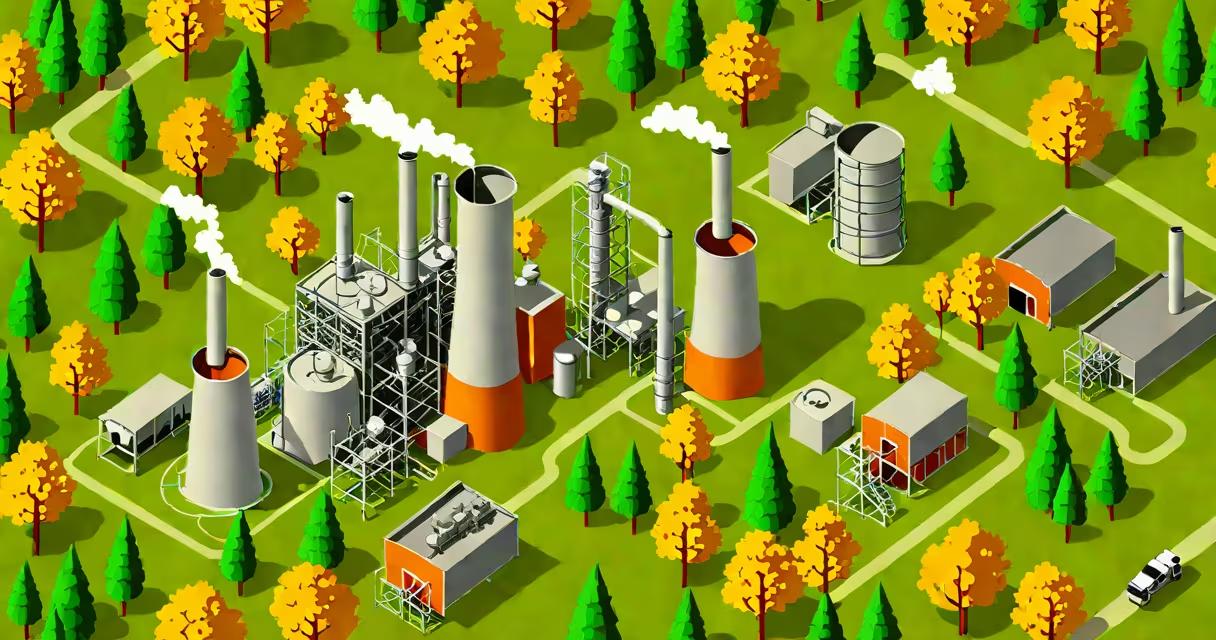
Biomass energy comes from organic materials like wood, crops, or waste, which are burned or converted to produce electricity, heat, or fuel. These materials release stored chemical energy when processed.
Biomass energy converts organic material into usable energy through combustion, gasification, or fermentation. For example, burning wood releases heat, while fermenting corn produces ethanol. Unlike fossil fuels, biomass is renewable because plants regrow after harvest.
The most common types of biomass energy include:
| Type | Source | Common Use |
|---|---|---|
| Wood | Forests, sawmills | Heating homes, generating electricity |
| Agricultural Waste | Crop residues, manure | Biofuels, electricity |
| Algae | Ponds, bioreactors | Biodiesel, jet fuel |
| Municipal Solid Waste | Landfills, trash | Electricity, heat |
Biomass energy powers homes, industries, and vehicles worldwide. For instance, Sweden generates 30% of its heating from biomass, while Brazil produces ethanol from sugarcane for cars. The U.S. uses biomass to generate about 1.5% of its electricity.
Biomass energy is often confused with other renewable sources like solar or wind. However, unlike those, biomass requires organic material to function. It's also distinct from fossil fuels because it's carbon-neutral when sustainably managed.
One myth is that biomass energy always produces pollution. While burning biomass releases CO2, it's offset by the CO2 absorbed during plant growth. Another misconception is that biomass is inefficient-modern technologies like gasification improve efficiency.
In 2023, I visited a biomass plant in Oregon that processes forest debris into electricity. The facility burns wood chips and sawdust, generating enough power for 40,000 homes annually. The plant also recycles ash as fertilizer, reducing waste.