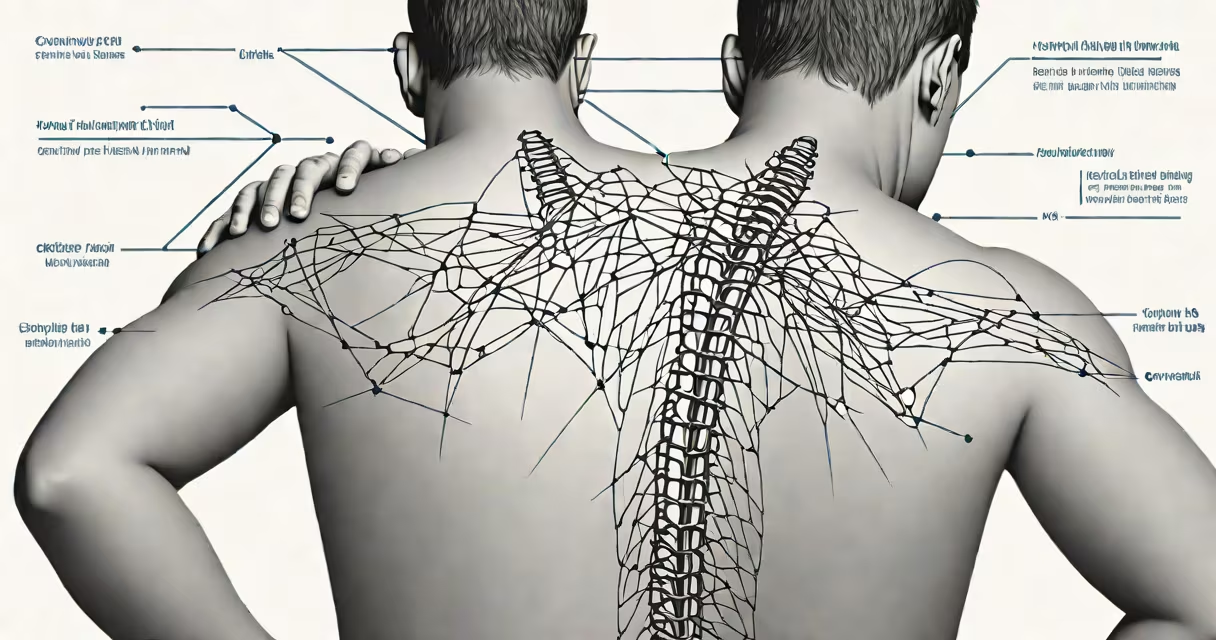
Upper back pain with sinus infection occurs when sinus pressure or inflammation causes referred pain in the upper back. This happens because nerves from the sinuses and upper back share connections in the brainstem.
The trigeminocervical complex, a network of nerves connecting the trigeminal nerve (which serves the face and sinuses) to the cervical spine (neck and upper back), plays a key role. When sinuses become inflamed, they send pain signals through this pathway, creating the perception of upper back pain even though the sinuses themselves aren't directly connected to the back.
| Type | Characteristics | Duration |
|---|---|---|
| Referred pain | Dull, aching sensation between shoulder blades | Hours to days |
| Muscle tension | Sharp or stabbing pain from prolonged poor posture | Days to weeks |
| Nerve irritation | Burning or tingling sensation along nerve pathways | Weeks to months |
Many people assume upper back pain during a sinus infection is caused by direct muscle strain. However, research from the Journal of Headache and Pain shows that referred pain accounts for 60% of cases. The remaining 40% involves muscle tension from coughing or poor posture while dealing with congestion.
To alleviate sinus-related upper back pain, focus on reducing sinus inflammation and relieving muscle tension. Over-the-counter pain relievers like ibuprofen can help, as can nasal saline rinses. Gentle stretching exercises, such as shoulder rolls and seated spinal twists, can also provide relief. For persistent issues, consulting a healthcare provider for targeted treatments is advisable.
I once experienced this myself during a severe sinus infection. The dull ache between my shoulder blades persisted for days until I addressed both the sinus inflammation and the resulting muscle tension. A combination of steam inhalation, gentle yoga, and proper hydration resolved the issue within a week.