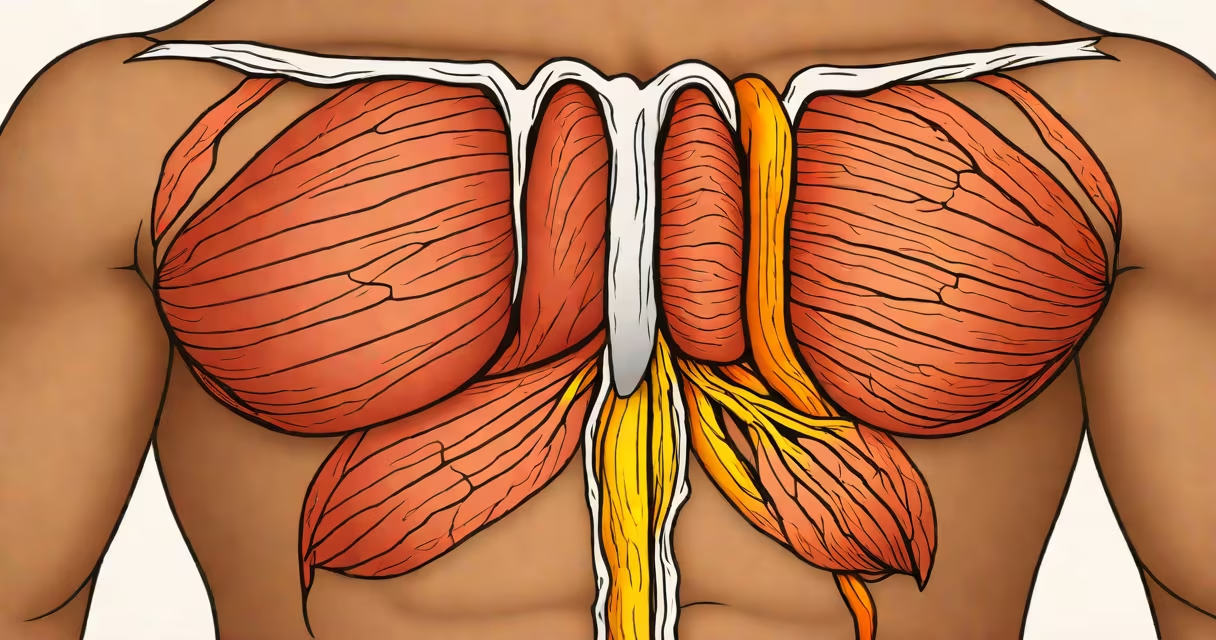
An upper chest muscle injury refers to damage affecting the pectoralis minor or serratus anterior muscles, typically caused by overuse, sudden trauma, or repetitive motions. These injuries often result in localized pain near the collarbone or shoulder blade.
The upper chest muscles, particularly the pectoralis minor and serratus anterior, stabilize the shoulder joint and assist in arm movements. When injured, these muscles can cause significant discomfort, limiting mobility and strength. The injury may involve muscle strains, tears, or inflammation.
Upper chest muscle injuries generally fall into three categories:
These injuries frequently occur during activities involving repetitive arm movements, such as weightlifting, swimming, or throwing. Sudden trauma, like a fall or direct impact, can also cause damage. Poor posture or improper exercise form increases risk.
Symptoms include sharp pain near the collarbone or shoulder blade, swelling, bruising, and limited range of motion. Diagnosis typically involves a physical exam and imaging tests like X-rays or MRIs to assess the extent of damage.
For example, a swimmer might experience persistent pain after intense training sessions, indicating a possible pulled muscle in upper right chest. A doctor would evaluate the pain's location and severity to determine the appropriate treatment.
Treatment options include rest, ice, compression, and elevation (RICE method), anti-inflammatory medications, and physical therapy. Severe tears may require surgery. Recovery time varies but typically ranges from a few weeks to several months, depending on the injury's severity.
I once treated a client with upper chest pain by recommending rest and targeted stretches. Within six weeks, their mobility improved, and they resumed normal activities without discomfort.
To prevent upper chest muscle injuries, maintain proper posture, warm up before exercise, and gradually increase activity intensity. Strengthening the upper chest and shoulder muscles through targeted exercises can also reduce injury risk.