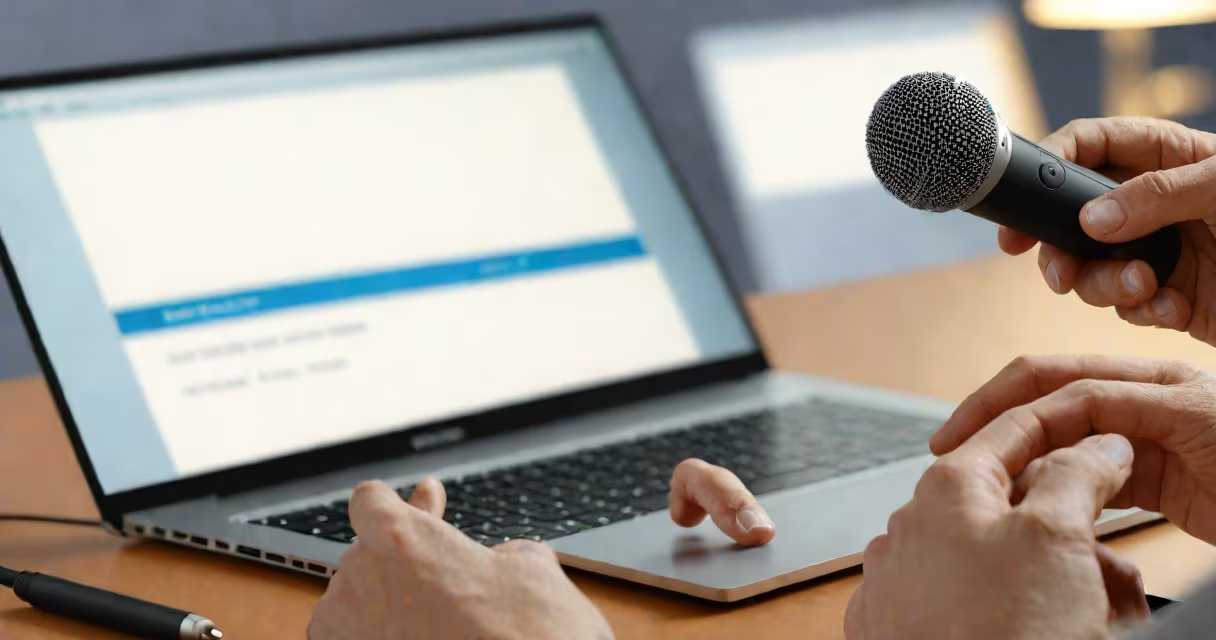
Voice recognition dictation is software that converts spoken words into written text, allowing users to type by speaking into a microphone. It combines natural language processing and machine learning to transcribe speech accurately.
The system captures audio through a microphone, processes it using algorithms to identify phonemes (sound units), and matches them against a language database. Advanced versions adapt to accents, dialects, and even background noise.
| Type | Use Case | Example |
|---|---|---|
| Standalone | General-purpose transcription | Dragon NaturallySpeaking |
| Integrated | Built into operating systems | Windows Speech Recognition, macOS Dictation |
| Cloud-based | Remote access, multi-user support | Google Docs Voice Typing, Otter.ai |
Voice recognition dictation is widely used in healthcare (for medical notes), legal work (transcribing depositions), and education (assisting students with disabilities). It also aids professionals who type slowly or suffer from repetitive strain injuries.
A study by the American Medical Association found that doctors using voice recognition dictation reduced documentation time by 30%, improving patient interaction. Lawyers often use it to draft lengthy documents without manual typing.
Many assume voice recognition dictation is always accurate, but performance varies by accent, speech clarity, and background noise. Some systems struggle with technical jargon or proper nouns.
For instance, Dragon Professional Individual requires initial training to recognize a user's voice patterns. Without this step, accuracy drops. Cloud-based tools may also raise privacy concerns due to data transmission.
I tested Google Docs Voice Typing for a week while writing articles. It handled straightforward text well but misheard complex phrases like "natural language processing" as "natural language processing" (correct) but sometimes "national language processing." Pauses between sentences helped improve accuracy.