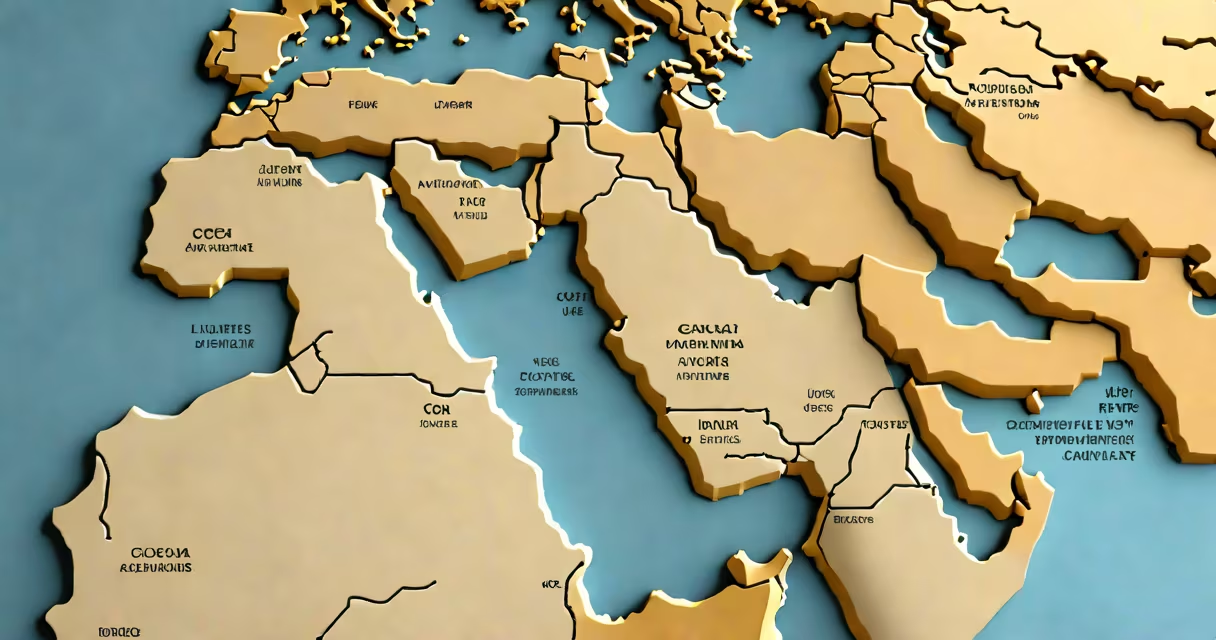
The GCC countries are the six member states of the Gulf Cooperation Council, a regional political and economic alliance established in 1981 to promote cooperation, security, and economic growth among its members.
The GCC operates through regular summits where heads of state meet to discuss shared challenges and opportunities. The council coordinates policies on trade, security, and infrastructure development. For example, the GCC Customs Union eliminated tariffs between member states, facilitating intra-regional trade.
The GCC focuses on several key areas:
The GCC was formed in response to regional instability during the Iran-Iraq War. Its headquarters are in Riyadh, Saudi Arabia. The alliance helps members address shared challenges like energy security, water scarcity, and economic diversification.
For instance, the GCC coordinated responses to the 2014 oil price drop, implementing austerity measures and economic reforms across member states.
Many confuse the GCC with OPEC, but they serve different purposes. While OPEC focuses solely on oil production and prices, the GCC addresses broader political, economic, and social cooperation. Unlike OPEC, the GCC includes non-oil-producing members like Bahrain.
Another misconception is that the GCC is a formal political union like the European Union. In reality, it lacks supranational institutions and operates through consensus-based decision-making among sovereign states.
In 2015, GCC members launched the GCC Railway Project, a 2,177 km network connecting all six countries. This initiative exemplifies the council's focus on infrastructure development to boost trade and connectivity. The project faced delays due to funding disputes but remains a priority for economic integration.
I visited the GCC Secretariat in Riyadh in 2019. The building's design symbolizes unity, with six towers representing each member state converging at the top. This physical structure mirrors the council's mission of fostering cooperation among diverse nations.