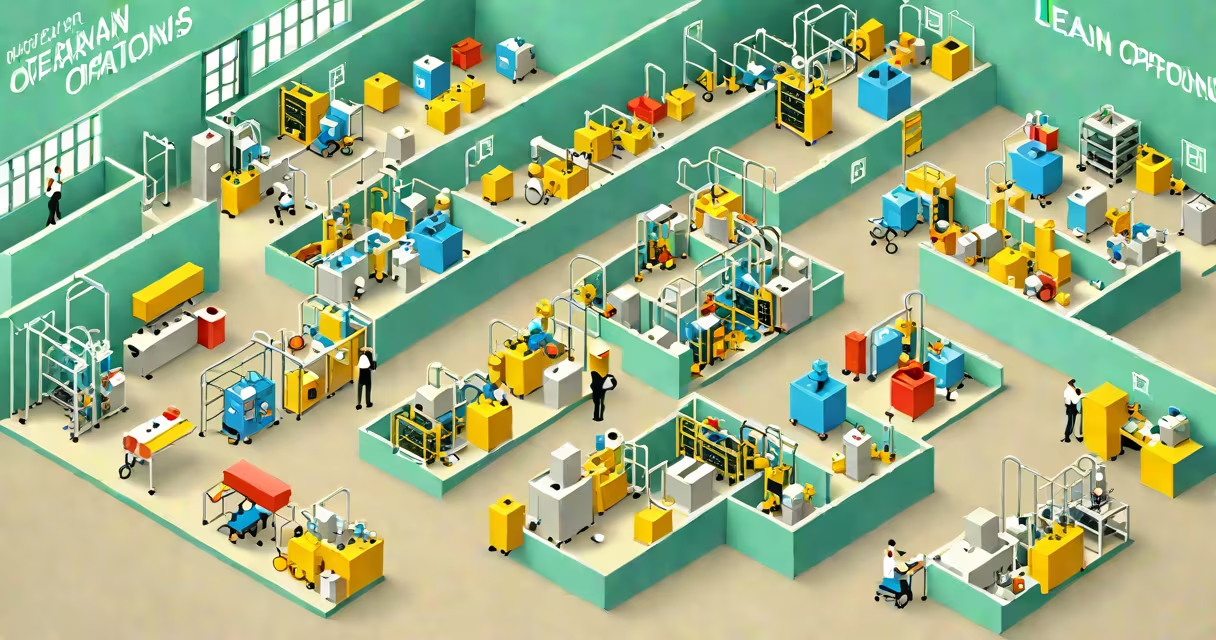
Lean operations eliminate waste to improve efficiency. The method applies to manufacturing, healthcare, and service industries. It focuses on delivering value to customers while minimizing resources.
Lean operations use five core principles: identify value, map the value stream, create flow, establish pull, and seek perfection. Toyota developed the structure in the 1950s to reduce inefficiencies in car production. It became known as the Toyota Production System.
Value is defined from the customer's perspective. A lean operation maps every step of a process to identify which steps add value and which do not. Steps that don't add value are waste and should be eliminated. The goal is to create a smooth flow of work through the system, with each step triggering the next automatically. This is called pull.
Continuous improvement, or kaizen, is central to lean operations. Workers at all levels regularly suggest small improvements to processes. These incremental changes add up to significant gains over time.
Lean operations target eight types of waste, often remembered by the acronym TIMWOOD:
| Type of Waste | Description | Example |
|---|---|---|
| Transportation | Unnecessary movement of materials or products | A factory moving parts between buildings multiple times |
| Inventory | Excess raw materials or finished goods | A warehouse storing parts for years without use |
| Motion | Unnecessary movement by people | Workers walking long distances to retrieve tools |
| Waiting | Idle time caused by bottlenecks | Machines sitting idle while waiting for parts |
| Overproduction | Producing more than needed | Manufacturing extra units before orders arrive |
| Overprocessing | Doing more work than necessary | Adding unnecessary features to a product |
| Defects | Errors requiring rework or scrap | Defective parts requiring repair |
| Defects | Unused employee skills or creativity | Workers unable to suggest improvements |
Lean operations apply to any industry where efficiency matters. Manufacturing was the first to adopt it, but healthcare, software development, and even government agencies now use it. For example, hospitals use lean principles to reduce patient wait times and improve care quality.
Many people confuse lean operations with cost-cutting. While lean does reduce waste, its primary goal is to increase value for customers. Layoffs are not part of lean operations unless they are necessary to eliminate waste.
Another misconception is that lean operations require significant upfront investment. In reality, many lean tools, like the 5S methodology, are low-cost and easy to implement. The 5S method organizes workspaces to improve efficiency and safety.
Consider a busy restaurant using lean operations to improve service. The kitchen staff maps the value stream of preparing a meal, identifying steps that add value and those that don't. They rearrange the kitchen layout to minimize motion, reducing the time it takes to prepare each dish. They also implement a pull system, where dishes are prepared only when ordered, rather than in advance.
The restaurant also reduces inventory waste by ordering ingredients more frequently in smaller quantities. This ensures freshness and reduces spoilage. By eliminating waiting time between courses, the restaurant improves customer satisfaction and increases turnover.
I once visited a restaurant that had implemented lean operations. The servers moved efficiently, the kitchen was organized, and meals arrived quickly. The manager explained that lean principles helped them reduce food waste and improve service speed, leading to higher customer satisfaction and repeat business.
Lean operations offer several benefits, including reduced costs, improved quality, and increased customer satisfaction. By eliminating waste, businesses can produce more with fewer resources. This leads to faster delivery times and lower prices for customers.
Lean operations also improve employee morale. Workers feel more engaged when they can suggest improvements and see their ideas implemented. This leads to a more motivated and productive workforce.
According to a study by the Lean Enterprise Institute, companies that implement lean operations see an average reduction in lead times of 50% and a 30% increase in productivity. These improvements translate into higher profits and a competitive edge in the market.
To start implementing lean operations, begin by identifying value from the customer's perspective. Map the current state of your processes to understand where waste occurs. Then, design a future state that eliminates that waste. Finally, continuously monitor and improve the process.
Start with small, manageable projects to build momentum. For example, organize a workspace using the 5S methodology. Once you see the benefits, expand lean principles to other areas of the business.
Lean operations are not a one-time project but a continuous process. By focusing on continuous improvement, businesses can stay competitive and deliver more value to their customers.