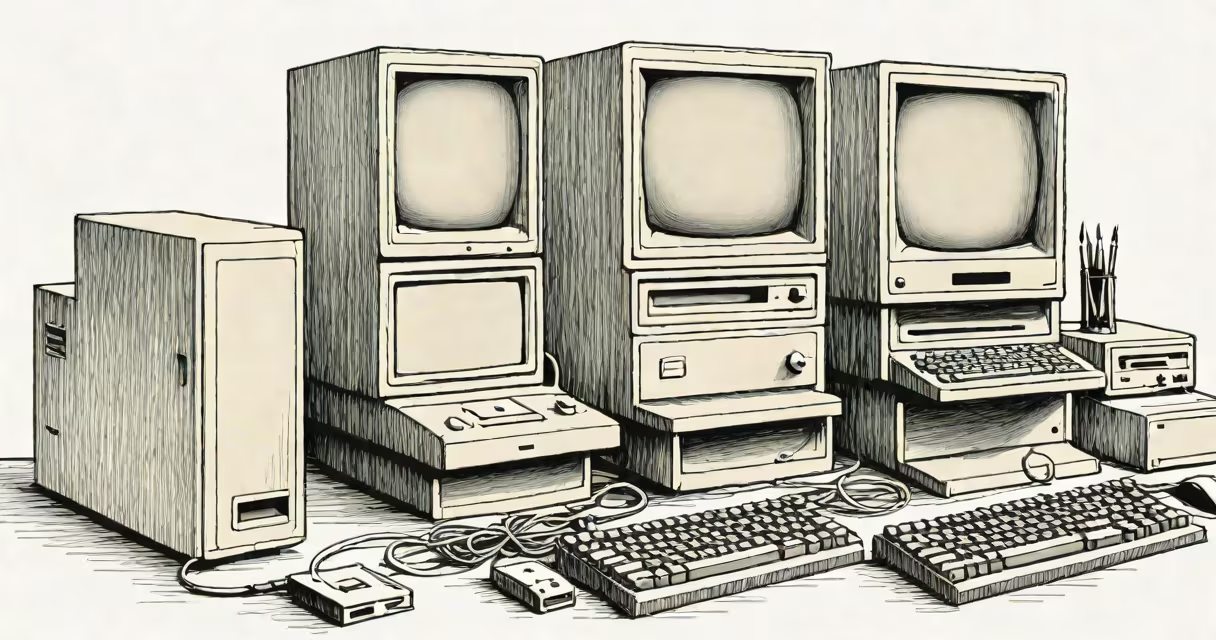
Macintosh computers are Apple's line of personal computers, first released in 1984, known for their graphical user interface and role in popularizing the mouse as a standard input device.
Macintosh computers run on Apple's proprietary operating system, originally called Classic Mac OS and now macOS. They use a combination of hardware and software designed to work smoothly together. The original Macintosh had a 68000 processor, 128KB of RAM, and a 400KB floppy disk drive. Modern Macs use Apple Silicon chips and support advanced features like Touch ID and Retina displays.
| Type | Release Year | Key Features |
|---|---|---|
| Macintosh 128K | 1984 | First model, 128KB RAM, 400KB floppy drive |
| Macintosh Plus | 1986 | 1MB RAM, SCSI port, expandable memory |
| Power Macintosh | 1994 | PowerPC processor, performance boost |
| iMac | 1998 | All-in-one design, USB ports, colorful designs |
| MacBook Pro | 2006 | Professional laptop, aluminum unibody design |
Macintosh computers are used in homes, offices, schools, and creative professions worldwide. They are particularly popular among designers, video editors, and musicians due to their useful hardware and software system. The original Macintosh was introduced during a live broadcast on January 24, 1984, and was the first commercially successful computer with a mouse and a graphical user interface.
According to Apple, as of 2023, there are over 100 million active Mac users globally. Many people prefer Macs for their ease of use, reliability, and integration with other Apple devices like iPhones and iPads.
One common misconception is that Macintosh computers are incompatible with Windows software. While it's true that Macs traditionally ran on different operating systems, modern Macs can run many Windows applications through virtualization software like Parallels Desktop or by using Boot Camp to dual-boot Windows.
Another myth is that Macs are always more expensive than PCs. While high-end Macs can be pricey, entry-level models like the Mac mini offer competitive pricing., the longevity and resale value of Macs often make them a cost-effective choice in the long run.
I remember my first encounter with a Macintosh computer in the early 2000s. It was a Macintosh Plus, and I was amazed by its simplicity and ease of use compared to the DOS-based PCs I was accustomed to. This experience sparked my interest in vintage tech and led me to explore more about the history and evolution of Macintosh computers.
Macintosh computers have played a significant role in the history of personal computing. From the iconic Macintosh 128K to the useful MacBook Pros of today, they continue to be a favorite among users who value design, usability, and performance. Understanding their development and impact provides insight into the broader evolution of computing technology.