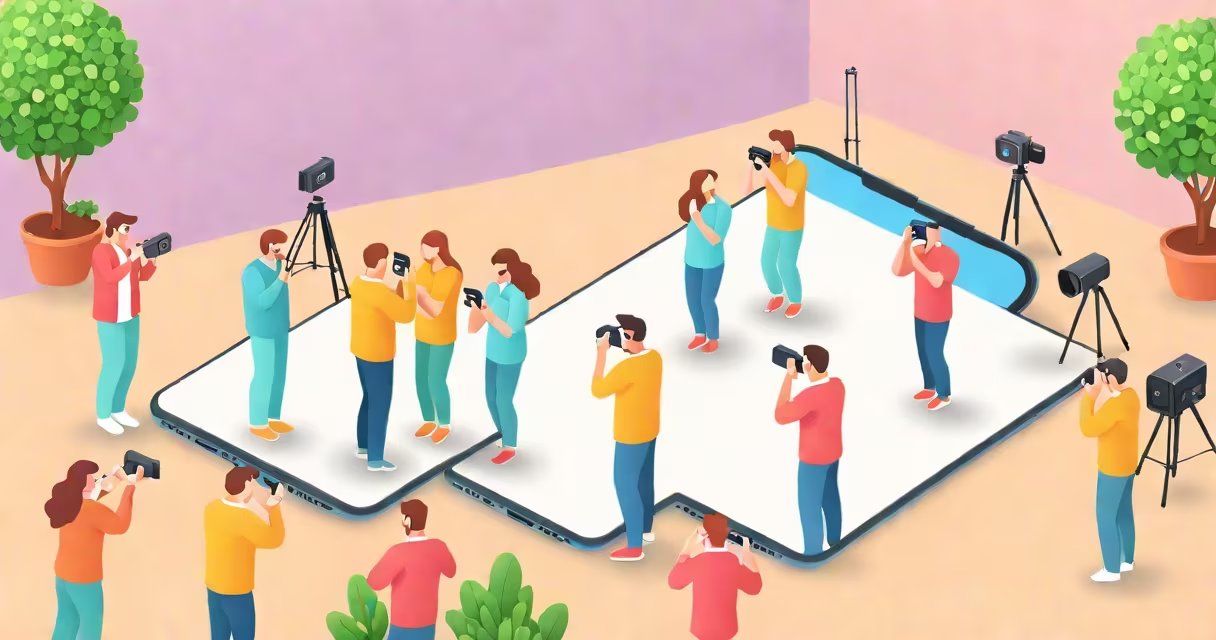
UGC videos are short, authentic clips created by everyday users rather than professional creators or brands. These unpolished, often improvised recordings thrive on platforms like TikTok, Instagram Reels, and YouTube Shorts.
UGC videos rely on spontaneity and relatability. Creators film themselves or their surroundings using smartphones, then edit lightly (if at all) before posting. Platform algorithms favor these videos because they generate high engagement through comments and shares.
For example, a viral UGC video might show someone attempting a viral dance challenge in their living room, with imperfect lighting and natural reactions from family members in the background.
| Type | Description | Example |
|---|---|---|
| Challenges | Users complete tasks or recreate trends | #FlipTheSwitch challenge on TikTok |
| Tutorials | Step-by-step guides for tasks or skills | DIY home improvement projects on Instagram Reels |
| Behind-the-Scenes | Casual glimpses into daily life or work | Celebrity makeup artists showing their process |
| Reactions | Filming oneself reacting to content or events | Viewers responding to movie trailers |
Social media platforms prioritize UGC videos because they keep users engaged longer. The authenticity of these clips builds trust with audiences, making them more likely to interact with the content.
Brands increasingly use UGC videos in their marketing strategies. A study by Stackla found that 90% of consumers say authenticity influences their decisions to support a brand. For instance, a clothing company might repost customer videos showing off their purchases in real-life settings.
Many assume UGC videos require expensive equipment or professional editing. In reality, the best-performing UGC videos often use basic smartphones and minimal editing. The key is capturing genuine moments that resonate with viewers.
Another misconception is that UGC videos are only for personal use. Businesses of all sizes use UGC videos to showcase products, share customer testimonials, and humanize their brand. For example, a local coffee shop might post a UGC video of a barista crafting a latte art design, with the shop's logo subtly visible in the background.
I once created a UGC video showing my attempt to bake a complicated dessert. The clip included my messy kitchen, frustrated expressions, and the final (somewhat burnt) result. Despite its flaws, the video received thousands of views and comments from others who had similar baking failures.
While professional videos offer polished production values, UGC videos provide authenticity and relatability. Professional content might showcase a perfectly choreographed dance routine, whereas UGC videos often capture the fun (and mistakes) of learning the dance at home.
Both types have their place. Professional content excels at storytelling and branding, while UGC videos build community and engagement. Many creators and brands use both strategically, such as a fitness instructor posting professionally edited workout routines alongside UGC videos of clients' progress.